
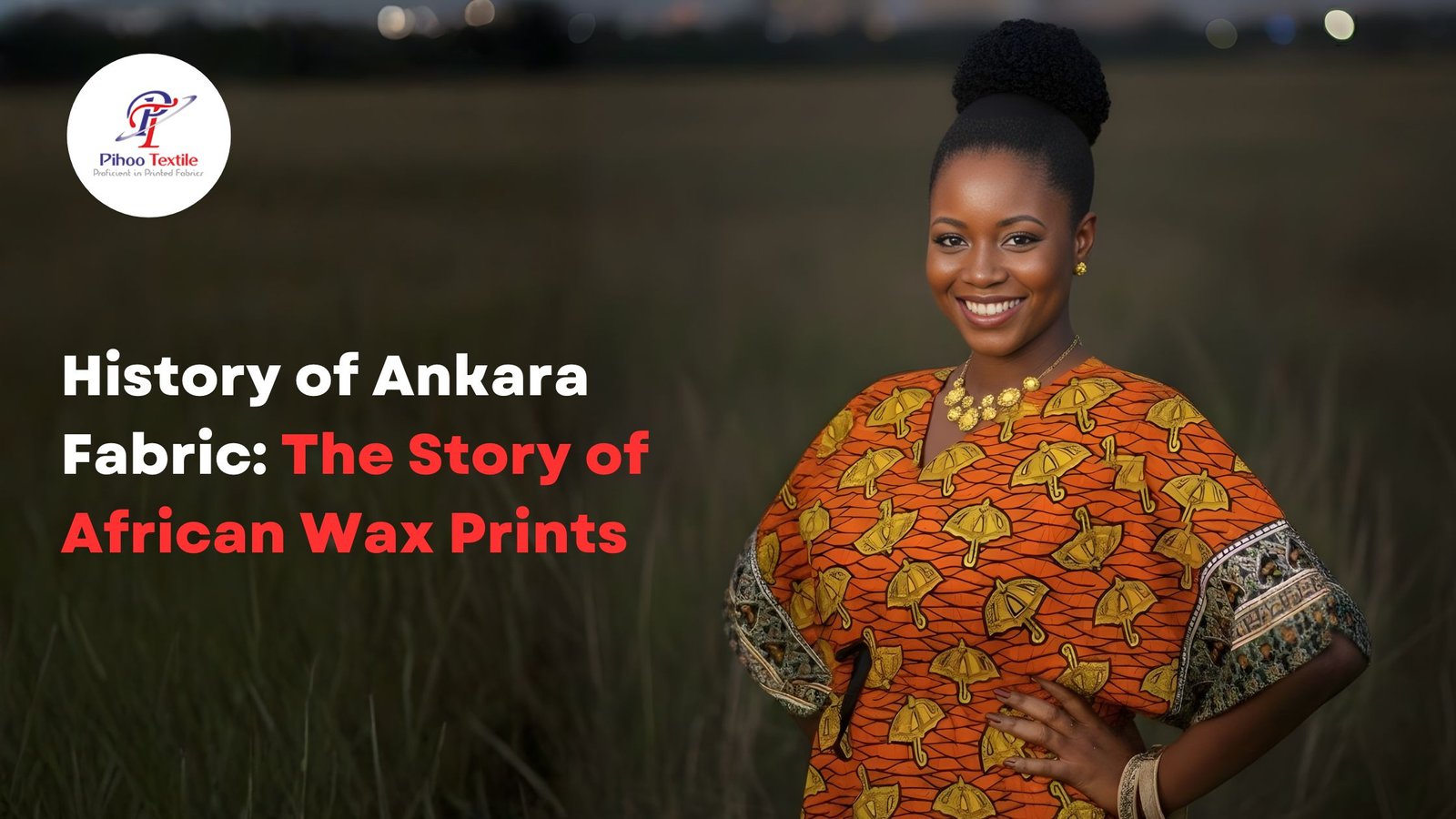
History of Ankara Fabric: The Story of African Wax Prints
Introduction
Most people assume Ankara fabric is African because it’s sold as “African wax print” and dominates West African fashion. The uncomfortable truth: this iconic textile didn’t originate in Africa at all. It started as Dutch industrialization of Indonesian batik, failed spectacularly in its intended Asian market, then found unexpected success in West Africa through a combination of colonial trade routes and cultural accident. West African communities took this rejected foreign textile and transformed it into something distinctly their own—brighter colors, bolder patterns, and embedded cultural meanings that had nothing to do with its Indonesian or Dutch origins. Understanding this complex history matters because it reveals how cultural adoption works in practice, not theory. This guide traces Ankara’s journey from 17th-century Javanese batik techniques through Dutch mechanization, rejection by Indonesian markets, embrace by West African communities, production shifts across continents, and eventual status as globally recognized fashion textile. The story demonstrates that “authenticity” is far more complicated than simple geographic origin.
Indonesian Batik Origins
Batik originated in Java, Indonesia, where artisans developed wax-resist dyeing techniques over centuries. Workers hand-painted molten wax onto cotton cloth in intricate patterns, then immersed the fabric in dye baths.
The waxed areas resisted dye penetration, creating patterns through contrast. After dyeing, artisans removed the wax by boiling, revealing the design. Complex multi-color patterns required repeating this process multiple times—wax, dye, remove wax, repeat.
This labor-intensive method produced expensive textiles that signaled wealth and status in Indonesian society. A single piece could take weeks or months to complete depending on pattern complexity.
Dutch Mechanization and the Indonesian Market Failure
Dutch colonizers in Indonesia during the 1800s saw commercial potential in batik but wanted faster, cheaper production. They mechanized the process using engraved copper rollers that stamped wax patterns onto both sides of cotton fabric simultaneously.
The mechanized cloth could be produced in days rather than weeks, dramatically reducing costs. Dutch manufacturers expected to dominate the Indonesian batik market with their affordable mass-produced versions.
Indonesian consumers rejected the mechanized batik. They considered the characteristic crackling—where wax broke during dyeing, allowing dye to seep through in irregular patterns—a manufacturing defect rather than desirable feature. The mechanical uniformity lacked the variation and artisanal quality that hand-batik provided.
Dutch manufacturers faced warehouses full of unsellable cloth and a failed business model. They needed new markets immediately.
The West African Discovery
Dutch and Scottish trading ships carried the rejected batik prints to West African ports as experimental cargo, hoping to find any market for the failed product. Around the same time, West African soldiers serving in the Dutch East Indies (Java) brought batik cloth home as gifts for family.
West African communities reacted completely differently than Indonesians. They saw the crackling effect as proof of authentic wax-resist processing rather than a flaw. The double-sided color intensity impressed buyers used to single-sided printed fabrics.
The bright colors and geometric patterns also appealed to West African aesthetic preferences. Unlike Indonesian buyers who valued subtle earth tones and specific traditional motifs, West Africans embraced bold, vibrant designs.
European manufacturers quickly pivoted their entire production toward the West African market. What started as a commercial disaster became a profitable business through pure accident.
Cultural Transformation and African Identity
Here’s what separates cultural appropriation from cultural adoption: West Africans didn’t just buy Dutch wax prints—they transformed them entirely. They commissioned custom designs incorporating local symbols, proverbs, and cultural references that had nothing to do with Indonesian batik traditions.
Pattern names took on African meanings. Designs communicated social messages between women—relationship advice, warnings, encouragement, religious faith. The textile became a communication medium rather than just decorative fabric.
The “Ankara” name itself reflects this adoption. While Dutch manufacturers called it “Java print” or “Dutch wax,” West Africans named it after Ankara, Turkey—showing how the fabric’s identity became detached from its manufacturing origins.
By the mid-20th century, wax print had become so embedded in West African culture that most people assumed it originated there. The adoption was so complete it erased awareness of the Indonesian-Dutch origins.
Production Shifts Across Continents
Early production remained in the Netherlands, with some expansion to England and Switzerland in the early 1900s. These European manufacturers dominated the market for decades.
Post-independence movements in the 1960s-70s sparked local African production. Nigeria, Ghana, and Ivory Coast established textile factories to produce wax prints domestically rather than importing from Europe.
Contemporary production has shifted primarily to China, where lower labor costs allow mass production at price points African manufacturers struggle to match. This creates tension—Chinese-made prints marketed as “African” fabric, continuing the pattern of geographic displacement.
The manufacturing journey traces global economics: Indonesian origin, Dutch mechanization, European production, African adoption, Chinese manufacturing. The fabric’s physical production and cultural meaning never aligned geographically.
The Manufacturing Process
Authentic wax print uses industrial batik methods. Molten wax gets applied to both fabric sides through engraved copper rollers, creating identical patterns front and back.
The fabric passes through dye baths, where waxed areas resist color penetration. Workers remove portions of wax between color applications, building multi-color designs layer by layer.
The characteristic crackling occurs when wax breaks during fabric handling and dyeing. These irregular veins where dye seeps through became the authentication mark—perfectly uniform prints signal cheaper printing methods rather than true wax-resist processing.
The double-sided quality distinguishes authentic wax prints from single-sided imitations. Cheaper “African print” uses surface printing that shows white or faded backing on the reverse.
Regional Names and Variations
The same textile carries different names across regions, each reflecting local adoption and cultural framing:
- Ankara: Most common in Nigeria, named after Ankara, Turkey
- Dutch Wax: References manufacturing origins in the Netherlands
- Hollandais: French term used in francophone West Africa
- Kitenge: East African name, though kitenge technically differs slightly from wax print
- Java Print: Original Dutch name, rarely used today
These naming variations demonstrate how cultural adoption works—communities name things based on their own reference points and experiences, not historical accuracy.
Contemporary Global Fashion
Ankara moved from traditional African ceremonial wear to global fashion runways over the past two decades. International designers incorporate wax prints into contemporary silhouettes, mixing African textiles with Western tailoring techniques.
The diaspora drove much of this global visibility. African immigrants and descendants in Europe, North America, and Asia wear Ankara to express cultural identity and maintain heritage connections.
Social media accelerated Ankara’s fashion prominence. Instagram and Pinterest showcase creative styling that blends traditional patterns with modern aesthetics, making the fabric aspirational rather than exotic.
FAQs
Q: Is Ankara actually African if it originated in Indonesia?
A: Cultural identity doesn’t require geographic origin. West Africans transformed mechanized Indonesian batik into something distinctly African through pattern selection, naming conventions, social meanings, and century-long cultural embedding. The fabric’s Indonesian roots don’t diminish its African identity—they demonstrate how cultural adoption and transformation work. Contemporary Ankara reflects West African aesthetic preferences and cultural functions, not Indonesian batik traditions.
Q: Why do some people call it “Dutch Wax” if Africans wear it?
A: The “Dutch Wax” name references manufacturing history—Dutch companies mechanized the batik process and dominated production for decades. The name persists as a quality indicator, distinguishing authentic wax-resist prints from cheaper imitations. It’s similar to “French press” coffee makers, which aren’t exclusively French but carry a name reflecting manufacturing history. The Dutch/African naming duality actually captures the fabric’s complex global journey better than either name alone.
Q: When did African countries start producing their own wax prints?
A: Local African production began seriously in the 1960s-70s following independence movements across West Africa. Nigeria, Ghana, and Ivory Coast established textile factories to reduce dependence on European imports. These factories produced authentic wax-resist prints using similar techniques as Dutch manufacturers. However, competition from cheaper Chinese production in the 2000s-2010s caused many African factories to close or shift to lower-cost printing methods.
Q: How can you tell authentic wax print from cheap imitations?
A: Flip the fabric—authentic wax print shows identical color intensity on both sides because dye penetrates completely through during the wax-resist process. Imitations print only on the face side, revealing white or faded backing. Look for the characteristic crackling—irregular veining where wax broke during dyeing. Check fabric weight; authentic wax print uses substantial cotton that has body and structure. Surface-printed imitations feel thinner and flimsier.
Q: Why is authentic wax print so expensive?
A: The multi-step wax-resist process requires significantly more labor, materials, and time than single-pass digital printing. Copper roller engraving, wax application, multiple dye immersions, and wax removal create inherent cost floors. Quality 100% cotton base cloth costs more than polyester. The price reflects actual manufacturing complexity, not arbitrary markup. Cheap “Ankara” uses simplified printing that cuts corners on quality and authenticity.
Q: Do Indonesian batik makers still produce traditional batik?
A: Yes, hand-batik remains a valued traditional craft in Indonesia, completely separate from mechanized wax prints. Indonesian artisans use traditional techniques with wax application tools, natural dyes, and culturally specific patterns. UNESCO recognized Indonesian batik as Intangible Cultural Heritage in 2009, protecting and promoting traditional methods. The mechanized “Dutch wax” that failed in Indonesia over a century ago has nothing to do with contemporary Indonesian batik culture.
Conclusion
Ankara’s history reveals uncomfortable truths about cultural identity, authenticity, and global commerce. A textile rejected by its intended market found unexpected success through cultural accident, then became so embedded in West African identity that its foreign origins were forgotten. The story demonstrates that cultural meaning matters more than geographic origin.
Explore authentic wax prints that honor this complex global journey. Understand the history behind the patterns you wear.
Pihoo Textile sources authentic wax print fabrics that respect the manufacturing traditions behind Ankara’s complex history—true wax-resist processing with double-sided color penetration, characteristic crackling, and 100% cotton construction. We recognize that “authentic” means honoring the production process, not making false claims about purely African origins.
Our collection includes both traditional patterns with decades of cultural meaning and contemporary designs that push the aesthetic forward. Every fabric listing provides honest information about manufacturing origin, fiber content, and production method—no misleading “African print” labels on cheaply printed polyester.
We curate patterns specifically for modern garment construction while maintaining the quality standards that made Ankara culturally significant in the first place. The bold colors, geometric precision, and structural cotton weight that West Africans embraced in the 1800s remain central to our selection criteria today.
Visit pihootextile.com to explore our wax print collection organized by color family, pattern scale, and design era. Filter by authentic wax-resist processing versus printed alternatives. Source fabrics that honor Ankara’s fascinating global journey—from Indonesian batik through Dutch innovation to West African cultural transformation. Because understanding the history makes wearing it more meaningful.
