
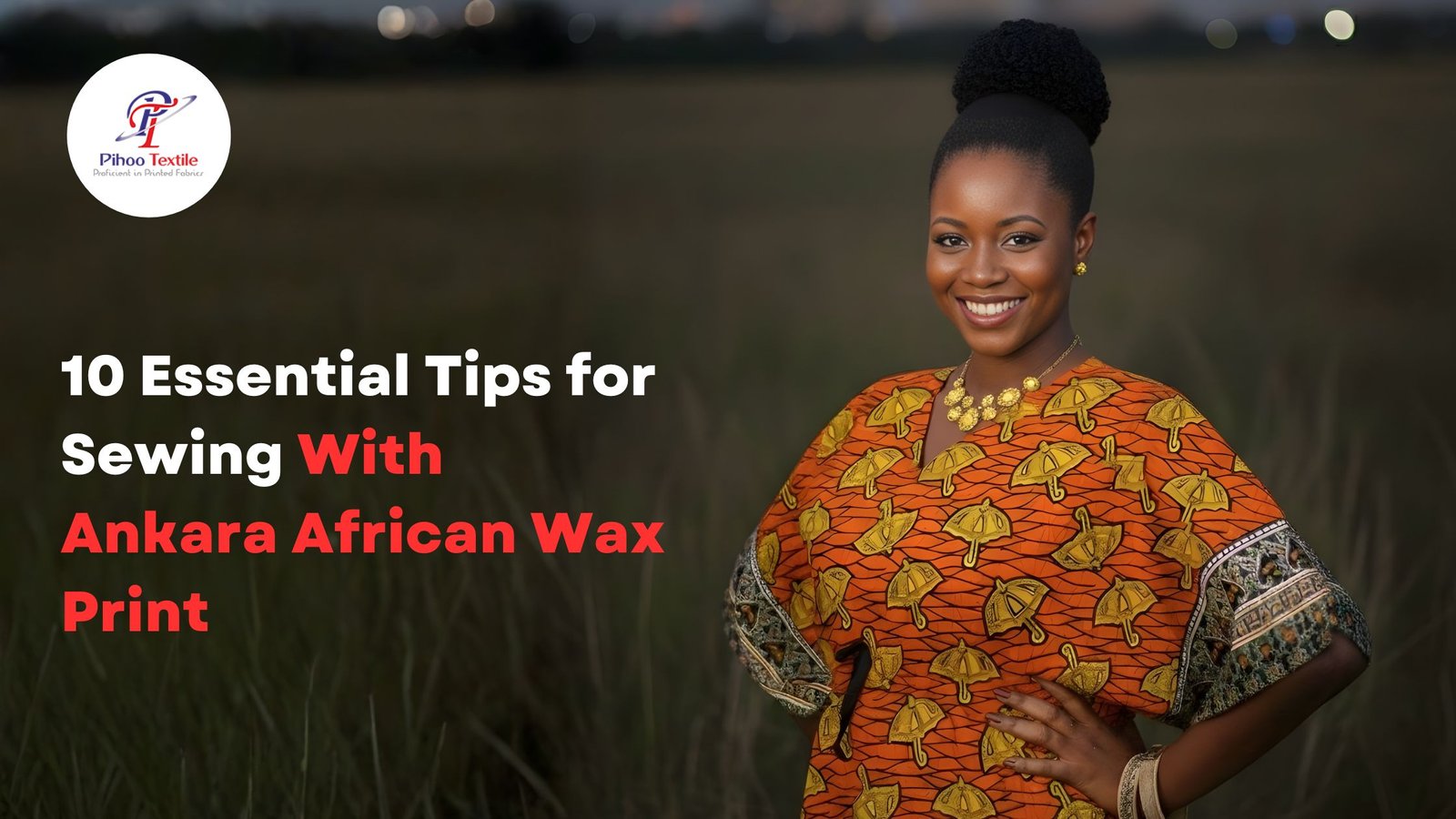
10 Essential Tips for Sewing With Ankara African Wax Print
Introduction
Most sewers buy Ankara fabric for its bold patterns, then ruin the first project through completely avoidable mistakes. They skip pre-washing, ignore print direction, cut pieces randomly without matching, and wonder why seams pucker or colors bleed. The uncomfortable truth: Ankara isn’t difficult—it just punishes carelessness harder than plain cotton. The wax-resist printing creates stiffness when new, the narrow width demands different layout strategies, and the busy patterns make poor cutting choices glaringly obvious in finished garments. But here’s the transformation: ten specific techniques turn Ankara from intimidating specialty fabric into predictable, professional-looking results. This guide covers buying adequate yardage for the narrow width, confirming 100% cotton composition, pre-washing to remove waxy finish and control shrinkage, choosing flattering patterns, planning print placement intentionally, matching repeats where it matters, marking pieces clearly, selecting appropriate needles and stitch length, finishing seams properly, and pressing throughout construction. Master these fundamentals and Ankara behaves like any quality cotton—just louder.
Buy More Fabric Than You Think
Ankara typically sells in 6-yard bundles at approximately 45 inches (115cm) width. This narrow width consumes more fabric than standard 60-inch cottons for identical pattern pieces.
Pattern envelopes list yardage requirements by fabric width. Always use the 45-inch column, then add 10-15% for pre-wash shrinkage and another 15-20% if planning print matching. A dress requiring 2.5 yards at 45-inch width needs 3.25-3.5 yards total when accounting for these realities.
The 6-yard bundle format often leaves excess fabric. Plan coordinating accessories—headwraps, bags, pocket details—to use remnants productively rather than wasting investment.
Confirm 100% Cotton Composition
Not all Ankara is created equal. Polyester blends marketed as “African wax print” lack the breathability, pressing behavior, and hand feel that make cotton Ankara comfortable for all-day wear.
Ask sellers for explicit fiber content confirmation. Labels on bundled fabric aren’t always accurate—get written specifications stating 100% cotton before purchasing.
The fiber difference affects every subsequent step. Cotton accepts steam pressing without melting, shrinks predictably, and breathes naturally. Polyester creates different challenges that require different solutions.
Pre-Wash and Press Before Cutting
New Ankara arrives with a stiff, waxy finish from the printing process. This coating affects drape, makes the fabric handle differently than it will after first cleaning, and can gum up sewing machine needles.
Wash in cold water on gentle cycle before cutting any pieces. Use a color catcher sheet or wash alone for the first cleaning to catch any potential dye bleeding. Cotton Ankara can shrink up to 10% on first wash—pre-washing prevents garments from becoming unwearable after initial laundering.
After washing, the fabric softens dramatically and reveals its true colors and hand. This represents how the finished garment will feel and behave during wear. Press thoroughly with steam before laying out pattern pieces. Wrinkles distort cutting accuracy and make print matching impossible.
Choose Patterns That Showcase the Print
Ankara’s bold patterns demand simple silhouettes with fewer seams. Complicated princess seam constructions or heavily darted designs chop up the print into small sections that lose visual impact.
Look for patterns with larger pattern pieces—shift dresses, A-line skirts, simple tops with minimal seaming. These allow the fabric design to display across uninterrupted areas.
Fitted styles work when the print scale is small and busy. Large-scale motifs need looser silhouettes where the full design element shows without distortion from body curves.
Plan Print Placement Intentionally
Here’s what separates amateur from professional results: intentional print placement. Random cutting creates garments where dominant motifs land awkwardly—flowers bisected by bust darts, geometric centers split at side seams.
Study the fabric before cutting. Identify the most attractive motifs and plan where they’ll appear on the finished garment. Center striking designs on bodice fronts, skirt panels, or pocket placements.
Directional prints require consistent orientation across all pieces. Ensure motifs point the same direction on front, back, and sleeves—mixing orientations looks careless.
Match Prints Where It Actually Matters
Perfect print matching elevates Ankara garments from homemade to couture. But matching every seam wastes time and fabric.
Prioritize visible seams—center front, center back, side seams on simple silhouettes, and sleeve attachment on set-in styles. Skip matching at underarm curves, neckline seams, or anywhere complex curves make matching impossible.
Cut single layer rather than folded fabric when matching. This allows precise placement of each piece relative to the print repeat. Mark seam allowances clearly so you can align patterns at stitching lines, not cut edges.
The print repeat varies by design. Measure the distance between identical motifs in both directions before cutting. This determines how much extra fabric you need for deliberate matching.
Mark the Wrong Side Immediately
Wax print shows color on both sides, making wrong side identification difficult once pieces are cut. This creates confusion during construction—you might sew pieces together backwards without realizing until pressing reveals the mistake.
Mark the wrong side of every piece immediately after cutting. Use tailor’s chalk, fabric marker, or small safety pins at corners. Consistent marking prevents time-wasting errors during assembly.
Use Appropriate Needles and Stitch Length
Ankara sews like medium-weight cotton, requiring no special equipment. Universal needles in size 80/12 work for most weights. Heavier, denser Ankara might need 90/14.
Set stitch length between 2.4mm and 3.0mm. Shorter stitches can pucker the fabric, while longer stitches may not provide adequate seam strength. Test on scraps to find the sweet spot for your specific fabric weight.
Let the fabric feed naturally under the presser foot. Don’t pull or push—this distorts stitching and creates wavy seams. The fabric’s slightly stiff hand (even after pre-washing) means it feeds predictably without stretching or slipping.
Finish Seams for Durability
Cotton Ankara frays along cut edges, especially after repeated washing. Unfinished seams look messy inside unlined garments and compromise structural integrity over time.
Serge or overlock seam allowances immediately after stitching each seam. If you lack a serger, use a zigzag stitch along raw edges.
Clean interior finishing matters particularly for unlined dresses, open cardigans, and any garment where seams might show during wear. French seams or flat-felled seams provide even cleaner alternatives when construction allows.
Press Throughout Construction
Pressing is half the professional look. Ankara responds beautifully to steam and heat, creating crisp seams and sharp edges that elevate finished quality.
Press every seam immediately after stitching and before crossing with another seam. This sets the stitches and flattens the fabric for accurate next steps. Use steam liberally—the cotton fibers accept moisture and heat without damage.
Press seam allowances open on most construction for flattest finish. Pressing to one side works for topstitched details or when seam allowances will be enclosed.
Final pressing makes or breaks the garment. Press the completed piece thoroughly before wearing. Pay special attention to hems, collar edges, and any topstitched details.
FAQs
Q: Do you always have to pre-wash Ankara fabric?
A: Yes, unless you want a garment that shrinks and feels different after first cleaning. The waxy coating on new Ankara affects how it sews and wears—it can gum up your needle and makes the fabric stiffer than it will be after washing. Pre-washing removes the coating, accounts for shrinkage (up to 10% in cotton), and reveals the true fabric hand. The only exception: projects that will never be washed, like wall hangings or purely decorative items.
Q: How do you prevent color bleeding when washing Ankara?
A: Wash new Ankara separately or with a color catcher sheet for the first 1-2 cleanings. Most quality Ankara is colorfast due to the wax-resist dyeing process, but testing prevents disasters. Use cold water always—hot water can cause unnecessary shrinkage and fade colors faster. After the first few washes, Ankara can be laundered with similar colors without special precautions. The dye penetrates completely through the fabric fibers, making properly processed Ankara remarkably stable.
Q: Can you iron Ankara at high heat?
A: Yes, because authentic Ankara is 100% cotton. Use your iron’s cotton setting with steam for best results. Press on the wrong side when possible to protect the print surface, though wax print tolerates face-up pressing better than surface-printed fabrics. Avoid leaving the iron in one spot too long—keep it moving to prevent any potential shine or scorch marks. The fabric actually needs aggressive pressing to achieve the crisp, professional finish that makes Ankara garments look polished.
Q: What’s the best way to soften stiff Ankara quickly?
A: Wash in warm water with fabric softener, then tumble dry on medium heat. This accelerates the softening process that would happen gradually through multiple cold-water washes. For immediate softening without washing, soak in a basin of warm water with softener for 30 minutes, rinse, and air dry. The fabric loses some stiffness immediately. However, the slight body that remains even after softening is actually desirable—it provides structure that helps garments maintain shape during wear.
Q: Do you need special thread for sewing Ankara?
A: No special thread required. Standard all-purpose polyester thread works perfectly. Match thread color to the dominant color in the print, or use a neutral that blends with multiple colors if the print is very multicolored. Cotton thread works but polyester provides slightly better strength and won’t shrink if you accidentally wash in hot water later. The thread choice matters far less than proper needle size, stitch length, and consistent tension.
Q: How do you match prints across pattern pieces efficiently?
A: Cut single layer, not folded fabric, when matching is important. Pin your pattern piece to the fabric, positioning it to center the best motifs. Trace around the piece with chalk or marking pen, then move the pattern to the next piece location, manually aligning the print at seam lines before pinning and cutting. This takes more time than random cutting but creates dramatically better results. For pieces that must mirror (like left and right bodice fronts), flip the pattern piece and align manually rather than cutting folded—this ensures both pieces feature the same print area in the same position.
Conclusion
Ankara rewards preparation over spontaneity. Pre-wash to get the real fabric. Plan print placement before cutting. Match where it shows. Press like you mean it. These techniques transform bold African wax print from intimidating specialty fabric into predictable, professional results that justify the fabric investment.
Start your next project with these ten fundamentals. Build garments that showcase both the print and your construction skills.
Pihoo Textile stocks Ankara African wax print fabrics with verified 100% cotton content and true wax-resist processing—not cheap polyester imitations that frustrate sewers with unpredictable behavior. Every fabric listing includes complete specifications: fiber content, actual width (typically 45″/115cm), weight, and care requirements so you can calculate accurate yardage before ordering.
We curate print selections specifically for garment sewing rather than dumping random designs. Our collection emphasizes clear pattern repeats that make matching possible, medium weights that sew predictably, and versatile color palettes that coordinate with standard wardrobe pieces. Each print includes high-resolution photography showing the full repeat so you can plan print placement before fabric arrives.
Sample swatches ship within 48 hours for physical pre-testing. Order small quantities to confirm the fabric behaves as expected with your preferred sewing techniques before committing to full project yardage. No surprises about hand feel, weight, or print clarity when production fabric arrives—what you sample is exactly what you receive.
Visit pihootextile.com to explore our Ankara collection organized by color family, pattern scale, and design style. Filter by weight and width specifications. Source fabrics that sew cleanly, press crisply, and wear beautifully—because mastering Ankara starts with quality cotton that behaves predictably from pre-wash through final pressing.
