
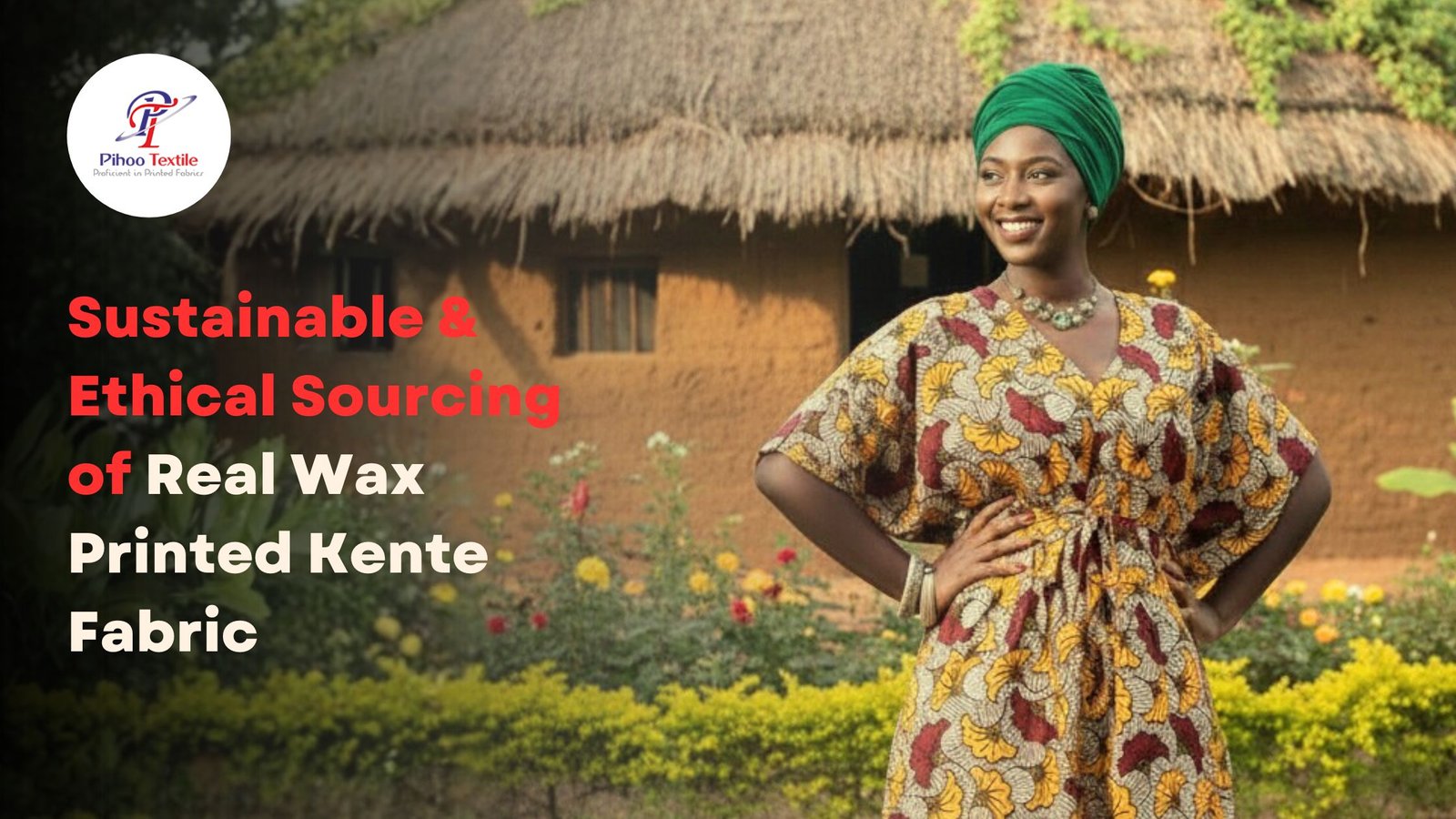
Sustainable & Ethical Sourcing of Real Wax Printed Kente Fabric
Textile buyers face a sustainability paradox. Demand for authentic African prints grows while supply chains remain opaque, making it nearly impossible to verify ethical practices or environmental standards. Real wax printed Kente fabric sits at this intersection—a textile category where cultural heritage meets modern production demands. Yet most sourcing decisions rely on supplier claims without verification mechanisms.
The uncomfortable reality? Ghana’s textile industry, despite its cultural significance, faces environmental challenges from water-intensive dyeing, chemical pollution, and limited waste management infrastructure. Meanwhile, mass-produced imitations flood markets with no accountability. For brands committed to sustainable sourcing, this creates a critical gap between intention and execution. This piece provides a practical framework for sourcing real wax printed Kente ethically—covering traditional sustainability practices, modern production standards, verification methods, and supplier evaluation criteria. Understanding these elements separates authentic sustainable sourcing from marketing claims.
Traditional Kente Production and Environmental Benefits
Traditional Kente weaving in Ghana’s Ashanti and Ewe regions operates on inherently sustainable principles that modern textile production often overlooks.
Handwoven Kente uses natural cotton or silk fibers sourced locally, eliminating carbon-intensive international shipping. Weavers historically relied on plant-based dyes extracted from bark, roots, and leaves—biodegradable materials that don’t contaminate water systems. The narrow-strip loom technique generates minimal fabric waste since weavers plan dimensions precisely before starting.
 Community-Based Labor Model
Kente weaving traditionally occurs within family units and community cooperatives where skills pass through apprenticeships spanning years. This structure ensures fair compensation since weavers control pricing and production pace. No factory conditions, no wage exploitation, no forced overtime.
However, the contrarian insight matters here: handwoven Kente production cannot meet global market demand. A single handwoven piece requires weeks of labor, making scalability impossible for commercial textile buyers needing consistent volume.
Modern Adaptations: Real Wax Printed Kente
Real wax printed Kente bridges traditional aesthetics with modern production capacity.
This technique applies traditional Kente patterns using wax-resist printing on 100% cotton fabric—the same method used for authentic African wax prints. Advanced printing facilities maintain pattern integrity while achieving colorfastness and durability standards impossible with hand-dyeing. Production scales to meet commercial orders without compromising fabric quality.
Sustainability in Modern Production
Modern facilities can implement environmental controls that village-based handweaving cannot:
- Closed-loop water systems that filter and reuse dye water
- Digital printing technologies reducing chemical dye consumption by 40-60%
- Fabric quality standards ensuring longevity (200+ gsm cotton) that extends garment lifespan
- Batch consistency eliminating material waste from failed dye lots
The uncomfortable truth? A well-managed modern facility producing real wax printed Kente may achieve better environmental outcomes than traditional handweaving using unregulated chemical dyes and unfiltered wastewater.
Key Principles for Sustainable Sourcing
Buyers evaluating Kente fabric suppliers should apply specific sustainability criteria rather than accepting vague claims.
Material sourcing transparency matters first. Suppliers should document cotton origin, fiber certifications (organic, BCI, or conventional), and chemical inventories. Natural cotton requires more water than synthetics but biodegrades completely—a tradeoff worth making for sustainability-focused brands.
Verification Questions for Suppliers
Ask potential suppliers these specific questions:
- What percentage of water gets recycled in dyeing processes?
- Which certifications verify dye safety (OEKO-TEX Standard 100, GOTS)?
- How do you handle fabric waste from printing mistakes?
- What’s your fabric weight specification and thread count?
Suppliers unable to answer these questions lack the systems needed for ethical production.

Ethical Labor Standards
Labor practices separate ethical sourcing from exploitation, yet verification remains difficult without direct facility access.
Fair wage structures should exceed local minimum wages—not match them. Workers need safe conditions, reasonable hours (not exceeding 48 weekly), and freedom to organize. Child labor must be categorically prohibited with age verification systems.
Red Flags in Labor Practices
Watch for these warning signs during supplier evaluation:
- Reluctance to arrange facility visits or video tours
- Unusually low pricing that suggests wage cutting
- No documentation of worker benefits or employment contracts
- High employee turnover rates indicating poor conditions
A 2024 study of large-scale Ghanaian textile firms found that only 32% had implemented comprehensive environmental management systems despite regulatory requirements. This implementation gap extends to labor standards.
Supply Chain Transparency
Transparent supply chains allow buyers to verify sustainability claims through documentation rather than trust.
Best-practice suppliers provide batch traceability linking finished fabric to raw material sources, production dates, and quality inspections. Digital audit systems enable third-party verification without constant facility visits. Long-term supplier relationships build accountability—short-term sourcing prevents meaningful oversight.
Building Verification Systems
Implement these steps when establishing new supplier relationships:
- Request sample batches with full specifications documentation
- Test fabric quality through independent laboratories
- Schedule facility audits (virtual or in-person) before bulk orders
- Establish KPIs for environmental metrics and labor standards
- Create quarterly review processes with documented improvements
Suppliers genuinely committed to ethical practices welcome scrutiny rather than avoiding it.
Practical Buyer Evaluation Checklist
Before committing to bulk orders, evaluate suppliers across multiple dimensions simultaneously.
Production capacity determines whether suppliers can meet your volume needs consistently. Minimum order quantities should align with your business scale—excessively low MOQs often indicate quality compromises. Pricing must reflect quality standards; suspiciously low costs suggest corner-cutting in materials or labor.
Sample quality reveals actual capabilities. Test for fabric weight (200 gsm minimum for durability), print clarity, colorfastness through washing, and hand feel. Real wax printed Kente should show vibrant colors with slight texture from the printing process.
 Conclusion
Sustainable sourcing of real wax printed Kente fabric requires moving beyond marketing language into verifiable practices. The combination of traditional pattern heritage with modern sustainable production methods creates commercially viable options for ethical textile buyers. Supplier selection based on transparency, certifications, and documented practices separates genuine sustainability from greenwashing.
Pihoo Textile manufactures real wax printed Kente fabric at our Jetpur facility using 100% cotton base materials, advanced wax-resist printing technology, and quality control systems that ensure pattern authenticity and fabric durability. Our production processes incorporate water recycling systems and OEKO-TEX certified dyes, delivering sustainable African textiles that meet international standards.
Contact our team to request samples of our Kente fabric collection, discuss custom pattern development, or arrange a facility tour that demonstrates our commitment to ethical and sustainable textile manufacturing.
