
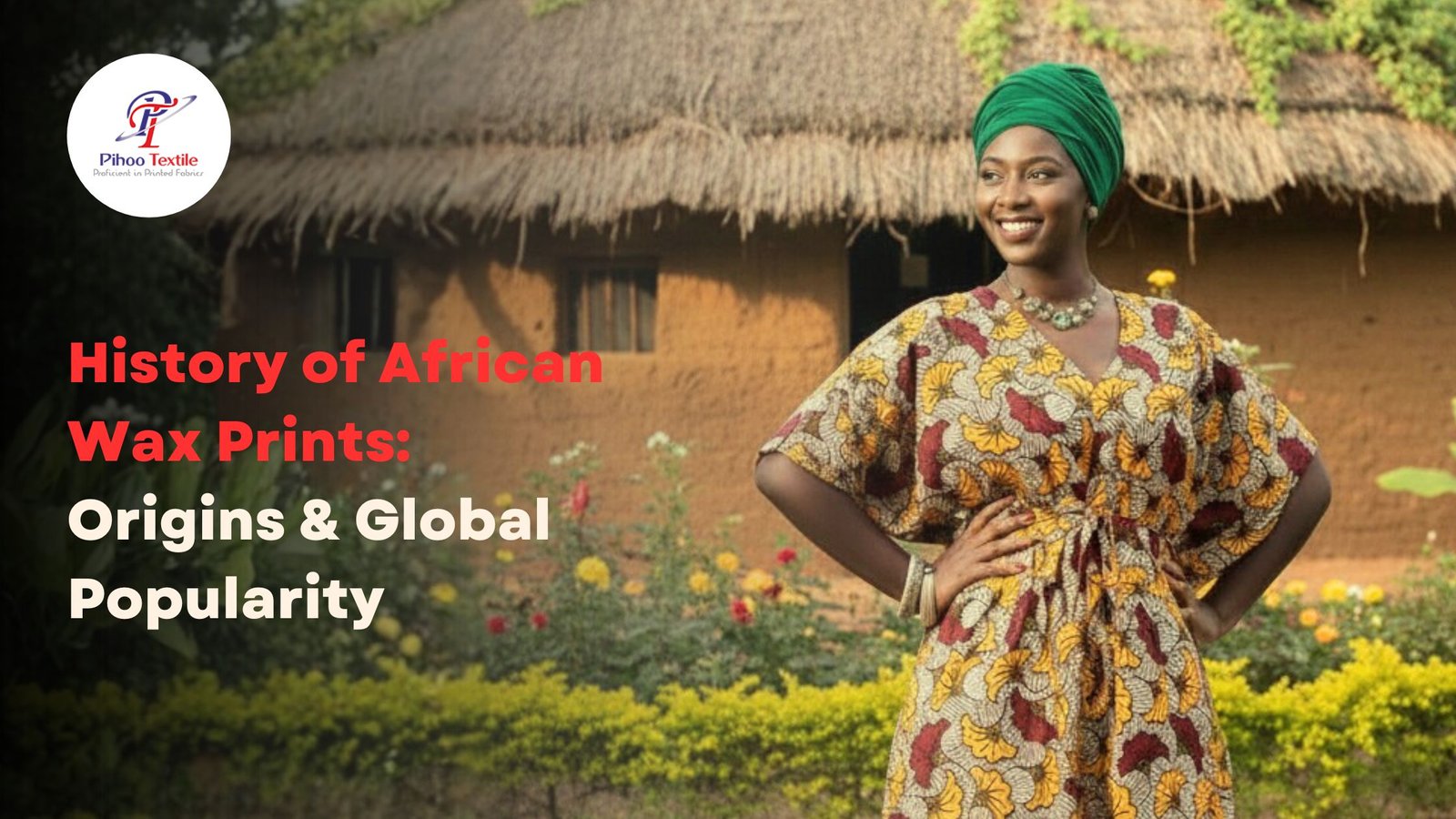
History of African Wax Prints: Origins & Global Popularity
Introduction
Here is a fact that surprises most fabric buyers: African wax prints are not African in origin. They were engineered in the Netherlands in the 1850s, rejected by their intended Indonesian market, and redirected to West Africa as commercial leftovers. What happened next is one of the most unexpected cultural transformations in textile history. West African communities adopted these surplus fabrics, assigned them local meaning, and built an identity so powerful that the word “African” now permanently precedes the product’s name. For fabric buyers, designers, and fashion creators, this history is not academic — it directly explains what separates authentic wax prints from imitations, why quality varies so dramatically across suppliers, and what production standards matter when sourcing these textiles today. This guide traces the full timeline from Indonesian batik through Dutch industrial production to global fashion adoption, with buyer-relevant insights woven throughout.
Indonesian Batik: The Original Inspiration
The technical foundation of African wax prints comes from Indonesian batik, a wax-resist dyeing tradition practiced across Java for centuries. Batik artisans applied hot wax to fabric by hand using copper stamps called tjaps, then immersed cloth in dye baths. The wax resisted color in covered areas, creating patterns through controlled dye exposure.
The characteristic crackle effect in authentic wax prints — fine lines of dye running through otherwise solid-colored areas — occurs when wax develops microscopic cracks during handling. In traditional Indonesian batik, this was considered a flaw. In African wax prints, it became a defining quality marker.
Dutch Industrial Innovation in the 1850s
Mechanizing the Batik Process
Dutch textile manufacturers encountered Javanese batik through colonial trade connections and recognized a commercial opportunity. In 1854, Jean Baptiste Theodore Prévinaire modified a mechanical block-printing machine to apply resin to both fabric sides simultaneously, replacing slow hand-application. Other manufacturers developed roller-based systems using engraved copper cylinders that could process hundreds of meters daily.
The mechanized process dramatically cut production costs compared to hand-applied batik. Factory owners anticipated strong demand in Indonesian markets, where batik held established cultural significance. They produced large inventory volumes in preparation for commercial launch.
Market Rejection and the Pivot to Africa
Why Indonesia Refused the Product
The mechanized fabrics failed completely in Indonesia for a reason no factory test could have predicted: they lacked the distinctive smell of authentic hand-applied batik wax. Indonesian buyers treated this absence as proof of inauthenticity. The fabrics also showed slight variations in crackle patterns between rolls, which hand-crafted batik never produced. Markets rejected the product despite its lower cost and consistent visual appearance.
Dutch and Scottish trading companies faced significant inventory losses. Starting in the 1880s, merchants began redirecting unsold stock to West African trading ports, effectively treating the continent as a secondary disposal market. The commercial decision carried no expectation of cultural impact.
West African Adoption and Cultural Transformation
From Rejected Inventory to Cultural Symbol
West African communities in Ghana, Nigeria, Senegal, and Côte d’Ivoire responded to these fabrics with immediate enthusiasm. Women drove adoption, purchasing fabrics in quantity and integrating them into existing textile traditions. Communities assigned local names to patterns based on personalities, proverbs, cities, and occasions, converting commercial designs into communication tools.
A particularly striking behavior pattern emerged: women in the same social networks deliberately avoided wearing identical patterns simultaneously, treating the fabrics as individually distinctive items rather than mass-produced commodities. This social practice added scarcity value to specific designs and created ongoing demand for new patterns.
Production Expansion and Local Manufacturing
African Ownership Develops
By the mid-20th century, African-owned production facilities began operating in Ghana and Nigeria, producing wax prints with Africa-specific pattern designs rather than European or Indonesian motifs. This shift brought design control to African producers and accelerated the cultural integration of these textiles.
Production centers across West Africa developed distinct regional aesthetics:
- Ghana: Bold geometric patterns with high color contrast
- Nigeria: Intricate symbolic motifs connected to Yoruba visual traditions
- Senegal: Flowing organic designs with French colonial aesthetic influences
- Côte d’Ivoire: Complex multicolor patterns with fine crackle detail
Global Fashion Recognition
From Regional Textile to International Fashion
African wax prints gained international visibility through two simultaneous forces in the 1960s: the Black Power movement’s embrace of African cultural identity in America, and European fashion’s growing interest in non-Western aesthetics. Both communities began wearing and incorporating wax print fabrics, exposing the textiles to global audiences outside African markets.
Contemporary fashion weeks in Paris, Milan, London, and New York regularly feature wax print garments. The fabrics appear in luxury collections, streetwear collaborations, and mainstream retail ranges. Ironically, the same European fashion industry whose predecessors created these textiles as Indonesian imitations now treats them as premium African heritage products.
Modern Production and Quality Standards
Today, wax print production operates across multiple continents including the Netherlands, China, India, and West Africa, with quality varying significantly between producers. The market divides into three categories:
- Real wax prints: Wax application on both sides, crackle effect throughout, 150-180 GSM, identical front-back vibrancy
- Fancy prints: Single-sided roller printing, lower GSM, no crackle effect, lower price point
- Imitation prints: Screen-printed patterns mimicking wax aesthetics without any resist-dyeing process
Sub-Saharan Africa alone consumed over 2 billion yards annually before Asian import competition intensified, demonstrating the scale of demand these fabrics generate. The volume also explains why low-quality imitations flood supplier catalogs — the market is large enough to absorb vast quantities of substandard product.
Why Authentic Wax Prints Matter for Buyers
Understanding this history clarifies why authentication matters beyond aesthetics. Authentic wax prints carry embedded quality indicators that developed through 150 years of production refinement:
- Color permanence derived from multi-stage dyeing rather than surface application
- Structural durability from dense cotton weaving that supports the resist process
- Two-sided vibrancy that makes garments presentable regardless of how fabric falls
- Colorfastness that withstands the washing frequency everyday garments require
Buyers who source imitations discover these performance gaps after project completion, not before. The fabric looks acceptable on the bolt but fails in finished garments within months.
FAQs
Why do authentic wax prints cost more than alternatives?
Real wax production involves three to six separate dye baths with wax application between each stage, a process that takes significantly longer than single-pass roller printing. Material costs also run higher because authentic production uses dense, fine cotton rather than standard weaves. These factors combine to make genuine wax prints 200-400% more expensive than imitations, a price difference that reflects real production complexity.
How did West African communities influence wax print design?
African traders provided direct feedback to European manufacturers about preferred colors, pattern scales, and motif types. Over time, manufacturers developed Africa-specific design collections based on accumulated buyer preference data. This iterative exchange produced the distinctive visual language now associated with African wax prints, gradually replacing European and Indonesian-inspired patterns with Africa-specific imagery.
Do different African countries have distinct wax print styles?
Yes, regional aesthetics developed over decades of localized production and cultural integration. Ghanaian patterns tend toward bold geometry, while Nigerian designs incorporate symbolic motifs from Yoruba visual culture. These distinctions matter for buyers creating region-specific garments or seeking culturally accurate fabrics for particular applications.
Is wax print production environmentally sustainable?
Traditional wax-resist production reuses wax collected after each boiling stage, reducing material waste compared to standard dyeing processes. However, the multiple dye baths require significant water usage. Manufacturers increasingly adopt closed-loop water systems and non-toxic dyes to reduce environmental impact, with certified sustainable options available at premium price points.
Conclusion
African wax prints traveled from Indonesian batik tradition through Dutch industrial production and West African cultural adoption to reach global fashion recognition — a journey spanning over 150 years across three continents. That history is embedded in every bolt of authentic fabric, and it shows in performance, durability, and cultural weight that imitations simply cannot replicate. Visit pihootextile.com, explore the collection, and request sample swatches to experience the quality difference firsthand.
Pihoo Textiles sources authentic wax print fabrics carrying the full production heritage described in this guide — genuine wax-resist processes, verified 100% cotton composition, and colorfastness standards that hold through years of regular use. Every piece is inspected for weight, two-sided color vibrancy, and manufacturer certification before reaching customers across India. Our collection spans traditional West African motifs, contemporary fusion patterns, and custom design options for commercial production.
Ready to source fabrics with genuine heritage? Visit pihootextile.com to browse our authenticated wax print collection, request sample swatches, and place orders with secure payment and reliable delivery across India.
