
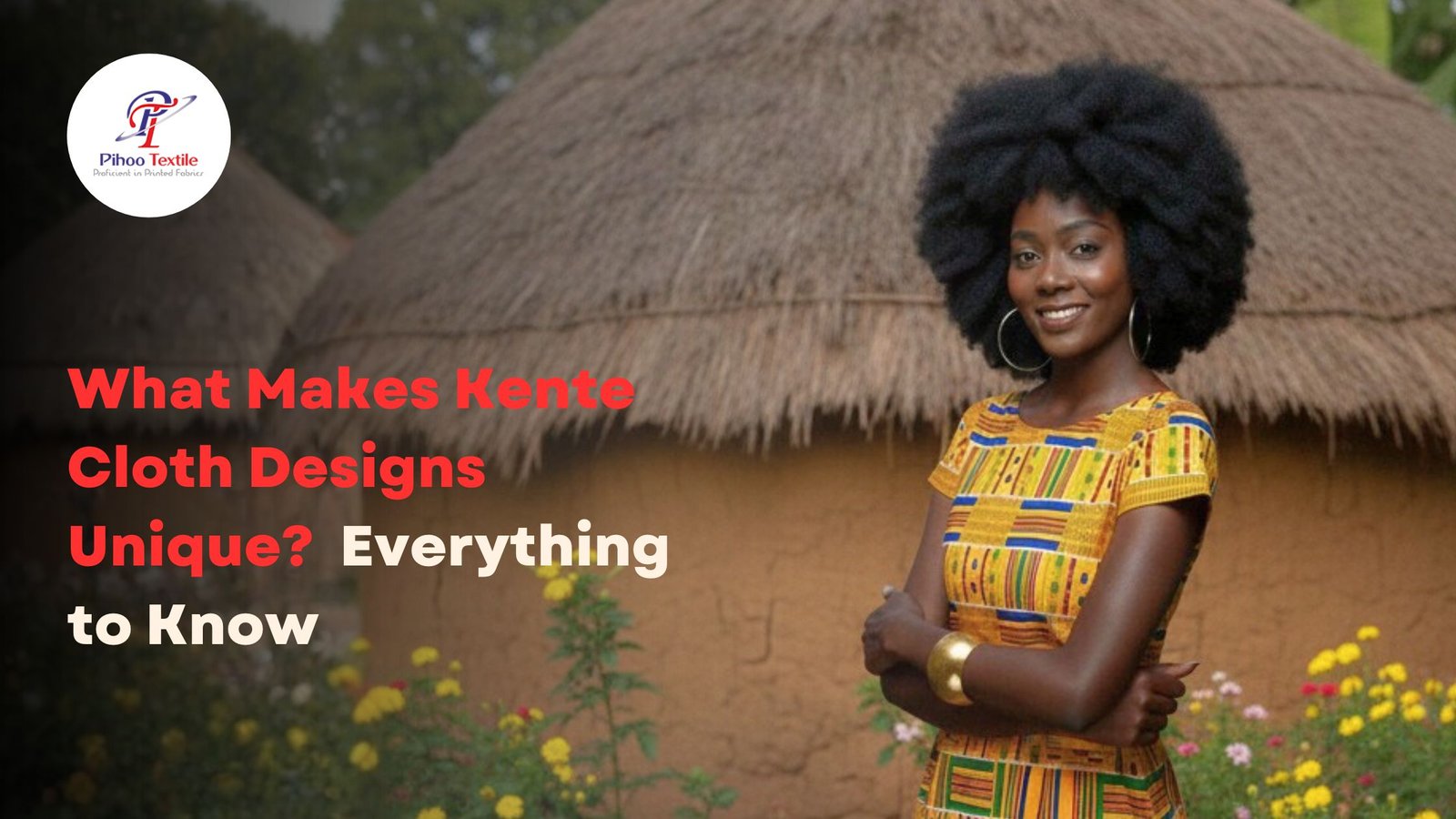
What Makes Kente Cloth Designs Unique? Everything to Know
Designers sourcing African fabrics frequently confuse Kente with generic “African print.” The two have almost nothing in common. Kente is a handwoven textile from Ghana’s Ashanti Kingdom with a precise symbolic language embedded in every color choice, geometric shape, and pattern name. Generic African prints are surface-printed cotton. Treating them as interchangeable misrepresents Kente’s cultural complexity and leads to sourcing decisions that disappoint customers expecting authenticity.
The contrarian reality? UNESCO’s 2023 inscription of Kente weaving on its Intangible Cultural Heritage list didn’t slow commercial demand for printed Kente—it accelerated it. Fashion brands, designers, and retailers now face sharper questions about what makes Kente designs culturally valid versus decorative imitation. This piece answers those questions directly, covering Kente’s origins, weaving techniques, color symbolism, pattern vocabulary, regional variations, and what separates authentic designs from surface-level replicas. Every section connects directly to what fabric buyers need to know.
History and Origins
Kente production began in Bonwire village in Ghana’s Ashanti region, where legend credits two brothers who observed a spider weaving a web and replicated the structure on a loom.
Early Kente used raffia palm fiber before weavers transitioned to imported silk and locally grown cotton. The fabric carried strict access rules—only Ashanti royalty and elite figures wore specific patterns, and unauthorized use carried serious social consequences.
This exclusivity shaped Kente’s design development. Patterns multiplied as different royal houses commissioned unique combinations, creating a visual library tied to lineage and status.
Traditional Weaving Techniques
Kente production operates through a narrow-strip loom system producing strips roughly 4 inches wide.
Each strip combines two distinct weaving modes. Plain weave sections create the fabric’s structural base. Design weave sections introduce pattern complexity by manipulating warp and weft threads independently. Weavers plan the full cloth before starting—strip sequences must align precisely when sewn together to form the complete design.
Production Timeline
A single experienced weaver produces approximately one narrow strip per day for complex patterns. A complete cloth requiring 24 strips takes three to four weeks. This labor intensity directly explains why authentic handwoven Kente commands premium pricing—the time investment is verifiable and irreducible.
Color Symbolism
Kente’s color choices follow an established symbolic system that weavers and wearers apply intentionally.
- Gold/yellow: royalty, wealth, and spiritual purity
- Red: passion, sacrifice, and political energy
- Green: growth, renewal, and agricultural prosperity
- Blue: peace, harmony, and love
- White: purity, purification, and festivity
- Purple: associated with feminine energy and healing
- Black: maturation, aging, and spiritual intensity
The contrarian insight? Color combinations carry more meaning than individual colors alone. A cloth dominated by gold and green communicates something entirely different from the same colors in reverse proportion. Buyers selecting Kente for specific occasions need this combination logic, not just individual color meanings.
Pattern Names and Meanings
Each Kente pattern holds a specific name in Akan language, with meanings tied to proverbs, historical events, or philosophical concepts.
- Adwinasa: “all motifs are exhausted”—represents completeness and mastery
- Nyankonton: “rainbow”—symbolizes beauty and divine mystery
- Nkyimkyim: zigzag pattern representing adaptability and life’s changing path
- Ohene Anewa: “king’s eyes”—associated with leadership and observation
- Fatene: linked to determination and forward movement
These names aren’t decorative labels—they’re the fabric’s actual content. When someone wears Adwinasa at a ceremony, they’re making a specific statement about completeness.
Geometric Motifs Explained
Kente’s geometric vocabulary assigns meaning to basic shapes consistently across designs.
- Triangle: represents the life cycle and transition
- Circle: eternity and royal continuity
- Diamond: dual nature of leadership (strength and wisdom)
- Cross: intersection of life paths and spiritual balance
- Stool shape: authority and ancestral connection
These motifs appear across hundreds of named patterns in varying configurations. The same triangle carries the same meaning whether it appears in a strip woven in Bonwire or printed on cotton for commercial fashion.
Regional Variations: Ashanti vs Ewe
Two distinct Kente traditions produce visually different results.
Ashanti Kente uses silk thread, produces brighter colors, and employs more complex geometric arrangements reflecting royal patronage history. Ewe Kente from Ghana’s Volta Region uses cotton thread, works with narrower strips, and incorporates figurative imagery alongside geometric designs—animals, tools, and objects appear in Ewe cloth.
Key Visual Differences
- Ashanti: bold contrasting colors, strict geometric patterns, wider strip format
- Ewe: subtler color combinations, figurative elements, narrative imagery
Buyers should specify which tradition they’re referencing when sourcing Kente-inspired fabrics, since design conventions differ substantially between the two.
Modern Adaptations and Printed Kente
Machine-printed Kente reproduces traditional designs on cotton fabric at commercial scale.
This adaptation makes Kente’s visual language accessible to global fashion markets without requiring hand-weaving labor. Quality printed Kente preserves authentic color combinations, pattern structures, and geometric accuracy while delivering consistent production quantities. The key distinction: printed versions reference the design tradition; handwoven pieces are the tradition.
For fashion brands and designers, printed Kente offers a commercially viable path to incorporating genuine cultural design vocabulary into product lines at accessible price points.
FAQs
Is printed Kente considered authentic?
Printed Kente reproduces authentic design patterns and color symbolism using modern manufacturing methods. It doesn’t replicate the handweaving process, but quality printed versions maintain accurate pattern names, color conventions, and geometric structures. Many contemporary Ghanaian designers use both handwoven and printed Kente depending on application.
Can Kente patterns be used for any occasion?
Traditionally, specific patterns carried occasion-specific rules—certain designs reserved for funerals, others for celebrations. Contemporary use is more flexible, but selecting patterns with appropriate color symbolism still signals cultural understanding to knowledgeable wearers.
What fabric weight suits Kente garment construction?
For structured garments like jackets and trousers, 180-220 gsm cotton provides sufficient body. Lighter weights (140-160 gsm) suit dresses and flowing tops. Fabric weight affects how geometric patterns read on the finished garment—heavier fabrics hold crisp geometric lines better.
Conclusion
Kente’s uniqueness rests on three interlocking systems: color symbolism, geometric motifs, and pattern naming conventions that operate simultaneously in every cloth. Understanding these systems separates informed sourcing from decorative selection.
Pihoo Textiles manufactures premium Kente print fabrics at our Jetpur, Gujarat facility, producing authentic Kente-inspired designs on quality 100% cotton using advanced wax-resist printing that preserves color vibrancy and geometric accuracy. Our fabrics bring Kente’s visual language to commercial fashion production at reliable quality standards.
Request samples from our Kente fabric collection at pihootextile.com, or contact our export team to discuss custom pattern development and bulk orders for your fashion line.
