
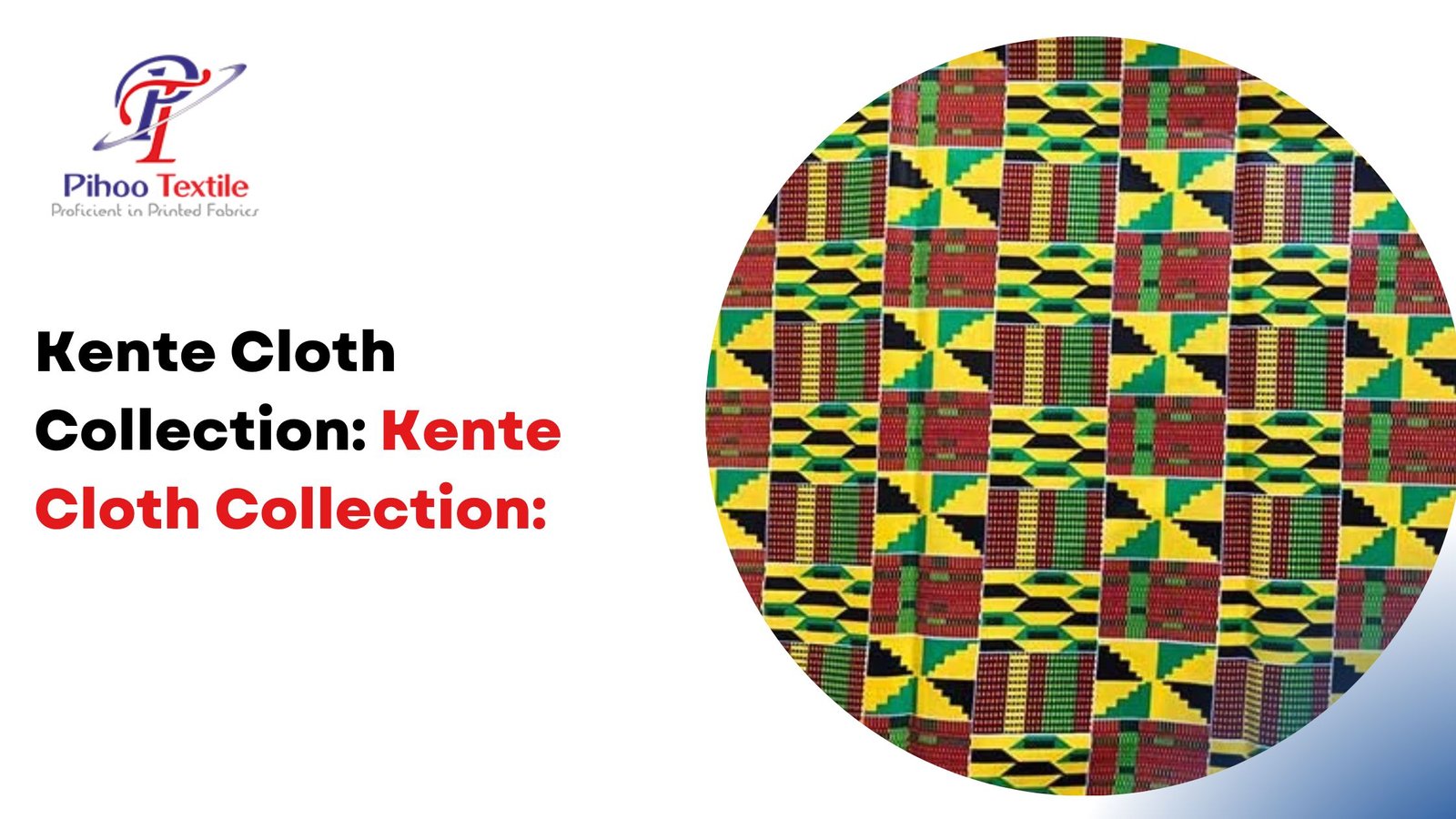
Kente Cloth Collection: Premium Fabric by Pihoo Textiles
Sourcing quality African wax prints is difficult due to wide price variation with little explanation, often revealing poor quality (color loss, cracks, thinness) only after purchase. The problem stems from a complex supply chain with multiple intermediaries, adding margin but lacking transparency and verified standards. Buyers face inconsistent quality, forcing brands to absorb the damage. Buyers seek stable manufacturing relationships: clear benchmarks, reliable pricing, and scalable ordering without quality risk.
This guide covers Kente’s culture, quality specifications, color/pattern symbolism, modern uses, and selection criteria for premium vs. mass-market fabric.
Cultural Heritage and Significance
Kente originated with Ghana’s Asante and Ewe peoples as royal cloth worn exclusively by kings, queens, and high-status individuals during sacred ceremonies. The weaving technique developed over centuries, with each pattern carrying specific names and meanings rooted in proverbs, historical events, or moral values.
“Adwinasa” literally translates to “all motifs are exhausted”—a pattern so complex it demonstrates mastery of every known weaving technique. “Obaakofo Mmu Man” means “one person does not rule a nation,” communicating democratic values through textile design. These aren’t decorative choices—they’re narrative communication methods.
Modern Kente maintains this symbolic framework even as production scales beyond artisan workshops. Pattern names and color combinations preserve cultural knowledge while adapting to global fashion and commercial markets.
Material Composition and Quality
Fiber Content
Authentic Kente combines silk and cotton in varying ratios depending on intended use and price point. Pure silk Kente delivers maximum sheen and vibrant color absorption but costs significantly more. Cotton-dominant blends (60-70% cotton, 30-40% silk) balance affordability with visual impact.
All-cotton Kente suits buyers seeking durability over luxury aesthetics. The fabric breathes better, washes more easily, and costs less while maintaining traditional weaving patterns. For everyday wear and high-volume production, cotton Kente makes economic sense.
Weaving Standards
Traditional Kente comes in narrow strips approximately 4 inches wide, woven on horizontal looms, then sewn edge-to-edge to create wider fabric panels. This construction method remains visible in finished cloth—the strip seams run parallel across the fabric width.
Machine-assisted weaving maintains traditional patterns while increasing production consistency. The strips show uniform width, even tension, and precise color alignment that purely handwoven versions sometimes lack. This isn’t cultural compromise—it’s quality control that benefits both manufacturers and buyers.
Color Symbolism and Pattern Meanings
Black represents spiritual strength, maturity, and intensified energy. Every authentic Kente incorporates black as foundational element. Gold signals wealth, royalty, and status—historically the most prestigious color. Red symbolizes blood sacrifice, political passion, and spiritual power.
Green indicates growth, harvest, and renewal. Blue means peace, harmony, and love. White represents purity, cleansing rites, and festive occasions. These associations run deep in Ghanaian culture—buyers using Kente for cultural celebrations should understand what their chosen colors communicate.
Here’s the uncomfortable reality: most Western buyers select Kente based purely on visual appeal without knowing what patterns and colors signify. A cloth heavy in red and black sends different messages than one dominated by blue and gold. This knowledge gap doesn’t invalidate purchases, but understanding symbolism enriches the wearing experience.
Contemporary Applications
Kente adapts well beyond traditional wrapped garments. Designers cut the fabric into tailored blazers, structured dresses, and fitted trousers that blend African heritage with current fashion silhouettes. The fabric’s weight and sheen suit formal wear particularly well.
Accessories leverage Kente’s visual impact in smaller formats. Scarves, ties, bow ties, clutches, and shoes incorporate the fabric without requiring full garment commitment. These items introduce Kente to buyers hesitant about wearing complete traditional outfits.
Home décor applications—cushion covers, throws, table runners, upholstered furniture—bring Kente into interior spaces. The fabric’s durability suits furniture use when properly backed and finished.
Quality Assessment Criteria
Examine strip seams where woven sections join. Quality Kente shows tight, even stitching with strips aligned properly. Poor construction displays gaps, puckering, or misaligned patterns across seam lines.
Check color consistency across the fabric length. Dye lots should match throughout—variations in shade from one end to the other indicate quality control failures. Professional production maintains batch consistency.
Test fabric hand by feeling texture and weight. Kente should feel substantial without stiffness. Overly rigid fabric suggests heavy sizing added to disguise inferior weaving. Quality cloth maintains flexibility while holding structure.
Care and Maintenance
Hand wash Kente in cold water with mild detergent. Hot water and harsh chemicals damage silk fibers and fade colors faster. Machine washing stresses seams where strips join, potentially causing separation over time.
Air dry flat or hang to prevent stretching. Machine drying applies heat and agitation that weaken both fibers and construction. Proper drying extends fabric life significantly.
Iron on medium heat, testing temperature on inconspicuous areas first. Silk content requires lower temperatures than pure cotton. Use pressing cloth between iron and fabric to prevent shine or scorch marks.
Conclusion
Premium Kente combines traditional weaving patterns with modern quality standards—silk-cotton blends, consistent dyeing, and reinforced strip construction. Understand color symbolism, assess construction quality through strip alignment and seam integrity, and choose compositions matched to intended use rather than assuming all Kente serves identical purposes.
Pihoo Textile manufactures Kente cloth using traditional Ghanaian patterns with quality-controlled weaving, colorfast dyeing, and strip construction built for contemporary applications. Our collection includes silk-cotton blends and pure cotton options in weights suitable for garments, accessories, and home décor. Visit pihootextile.com to explore Kente fabric selections, request samples showing different compositions and patterns, or discuss bulk orders and custom weaving specifications. Source authentic Kente with commercial reliability and cultural respect.
