
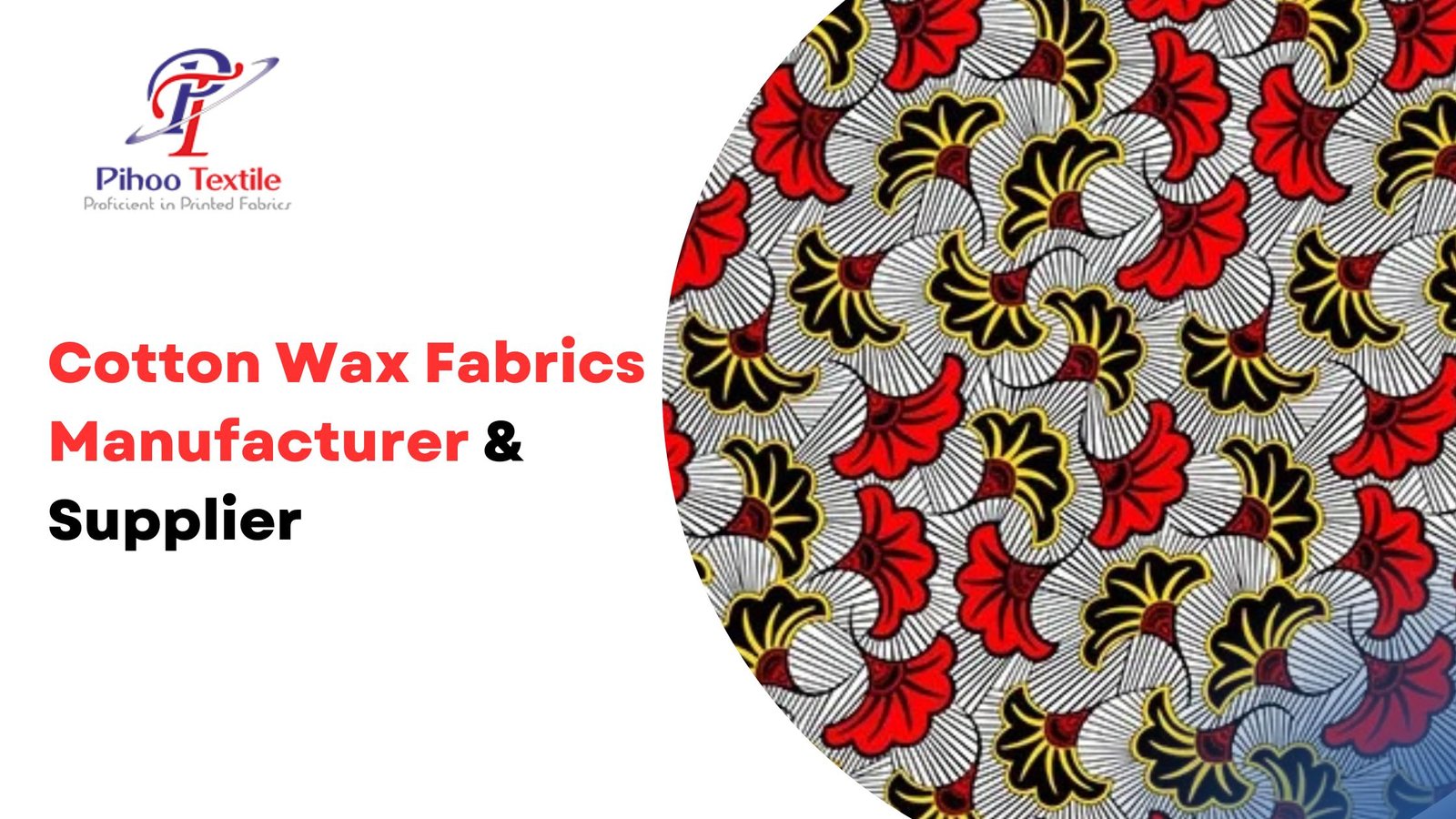
Cotton Wax Fabrics Manufacturer & Supplier: Pihoo Textiles
Introduction
Sourcing reliable cotton wax fabric suppliers in India presents a consistent challenge for fashion designers, boutique owners, and textile exporters. Over 70% of wax print suppliers mix authentic production with cheaper imitations in their inventory, creating quality inconsistencies that damage buyer reputations and customer relationships. The difference between real wax prints and fancy alternatives impacts everything from garment durability to color permanence, yet many suppliers fail to provide transparent specifications or consistent quality control. Buyers need manufacturers who maintain rigorous standards, offer verifiable product specifications, and deliver authentic wax cotton fabrics that perform as promised.
This guide differentiates quality cotton wax fabric manufacturers from volume suppliers, detailing authentic production, essential quality checks, and product applications. This knowledge aids informed sourcing decisions.
What Are Cotton Wax Fabrics
Cotton wax fabrics refer to 100% cotton textiles produced using wax-resist dyeing techniques that create bold, colorful patterns. The process applies melted wax or industrial resin to fabric surfaces before immersing cloth in dye baths, creating designs where wax repels color. This technique produces patterns with identical color intensity on both sides, a hallmark that distinguishes authentic wax prints from single-sided roller prints.
The fabric weighs between 150-180 GSM (grams per square meter), substantially heavier than standard cotton prints. This density creates a natural structure and body that holds garment shape without requiring additional interfacing. The characteristic “crackle” effect appears when wax develops microscopic cracks during processing, allowing dye to seep through in fine lines.
Cotton wax fabrics maintain cultural and commercial significance across African markets, with annual sales exceeding 2 billion yards in Sub-Saharan Africa alone. The textiles function as both fashion materials and cultural symbols, carrying patterns that communicate social messages and identity markers.
The Manufacturing Process of Authentic Wax Prints
Fabric Preparation and Wax Application
Production begins with high-quality cotton fabric featuring tight, dense weaving that accepts wax and dye evenly. Manufacturers apply melted paraffin wax or industrial resin using engraved copper rollers that transfer pattern designs onto both fabric sides. This double-sided application distinguishes real wax from cheaper fancy prints that apply color to one surface only.
The wax must reach precise temperatures during application—too hot and it penetrates completely through fibers without creating resist patterns; too cool and it sits on the surface without bonding. Skilled technicians monitor wax consistency throughout production runs.
Multi-Stage Dyeing Process
After wax application, fabric enters the first dye bath containing the lightest color in the design. Waxed areas repel dye while exposed cotton absorbs pigment completely. Workers remove fabric, allow thorough drying, then apply wax in new pattern areas before immersing cloth in the second color bath.
This process repeats for each color, typically ranging from three to six colors per pattern. More colors require additional production stages, directly impacting manufacturing costs and final pricing. Complex patterns with five or six colors cost 40-60% more than three-color designs due to extended production time.
Final stages involve boiling fabric to remove all wax residue, which gets collected and recycled for subsequent production runs. The boiling also sets dyes permanently into cotton fibers, creating the color permanence that quality wax prints demonstrate.
Quality Specifications & Standards
GSM, Width & Material Composition
Standard cotton wax fabrics measure 45-46 inches in width, matching industry norms for garment construction without excessive waste. Some manufacturers offer 54-inch widths for home décor applications requiring wider cuts. GSM ratings between 150-180 indicate authentic wax prints, while ratings below 120 GSM signal lighter fancy prints or imitations.
Material composition should read 100% cotton with no polyester or synthetic fiber blends. Cotton content ensures breathability, dye absorption, and the natural drape that makes wax prints suitable for warm climates. Synthetic blends cannot achieve the same wax-resist effects and fade faster than pure cotton.
Colorfastness & Durability Testing
Quality manufacturers conduct standardized colorfastness tests that measure color retention after washing, rubbing, and light exposure. Fabrics should maintain at least 90% of original color intensity after 20 wash cycles at 30°C. Rubbing tests verify that dry and wet abrasion does not transfer color to other surfaces.
Light fastness testing exposes fabrics to controlled UV radiation equivalent to six months of daily sunlight. Quality wax prints show minimal fading (less than 10% color shift) under these conditions. Suppliers who cannot provide test certificates often sell untested stock with unpredictable performance characteristics.
Product Range: Types of Wax Cotton Fabrics
Real Wax Prints & Super Wax
Real wax prints represent the premium tier, featuring wax application on both sides and characteristic crackle effects throughout patterns. Super wax denotes fabrics made from exceptionally fine, dense cotton with superior dye quality that produces more vibrant colors. These grades suit high-end fashion applications where fabric performance justifies premium pricing.
Fancy Prints & Imitation Wax
Fancy prints use roller or rotary screen printing to apply wax-style patterns on one fabric side only. Production costs run 50-70% lower than real wax, making these alternatives accessible for budget-conscious buyers. The prints lack the crackle effect and two-sided color vibrancy but work adequately for items requiring shorter lifespans or less rigorous use.
Custom Designs & Color Matching
Established manufacturers offer custom pattern development for minimum order quantities typically starting at 500-1000 meters per design. Custom services include color matching to specific Pantone references, pattern scaling adjustments, and exclusive designs protected under licensing agreements. Development timelines range from 30-45 days from approval to production completion.
Applications & Uses of Wax Cotton Fabrics
Fashion designers use wax cotton for dresses, shirts, pants, jackets, and accessories including bags, shoes, and headwraps. The fabric’s structure works well for fitted garments requiring shape retention without excessive pressing. Home décor applications include cushion covers, curtains, table linens, and upholstery for accent furniture.
Craft businesses source wax cotton for small items including phone cases, wallets, jewelry pouches, and gift wrapping materials. The fabric cuts cleanly without excessive fraying, a critical factor for detailed work requiring precise edges. Export businesses purchase bulk quantities for resale in international markets where African-inspired textiles maintain strong demand.
Minimum Order Quantities & Packaging
Most manufacturers set minimum order quantities between 200-500 meters for stock patterns and 500-1000 meters for custom designs. Fabrics ship in standard roll lengths of 25-30 meters, wrapped in protective plastic and packed in cartons for transport. Exporters typically purchase in container quantities of 5000-10000 meters to optimize shipping costs.
Payment terms vary but commonly require 30-50% advance payment with balance due before shipment. Established buyers with verified order history may negotiate net-30 or net-60 payment terms after building supplier relationships.
FAQs
Q: What certificates should reliable wax fabric manufacturers provide?
A: Quality manufacturers provide ISO certifications for production standards, Oeko-Tex certificates confirming fabrics are free from harmful chemicals, and colorfastness test reports from accredited laboratories. Request these documents before placing large orders to verify claims about quality and safety.
Q: How do I verify if a supplier offers genuine wax prints or imitations?
A: Request physical samples before ordering and check that colors appear equally vibrant on both fabric sides. Authentic wax prints feel heavier (150+ GSM) and display characteristic crackle patterns. Ask for manufacturer selvage markings showing brand information printed along fabric edges.
Q: What lead times should I expect for bulk wax fabric orders?
A: Stock patterns typically ship within 7-15 days after payment confirmation. Custom designs require 30-45 days including pattern development, approval, production, and quality inspection. Factor in additional shipping time based on destination and transport method selected.
Q: Can manufacturers match specific color requirements for custom orders?
A: Yes, established manufacturers offer Pantone color matching for custom orders meeting minimum quantity requirements. Provide specific Pantone references or physical color samples for accurate matching. Expect color matching to add 5-10 days to standard production timelines.
Q: What price range should I expect for authentic wax cotton fabrics?
A: Real wax prints typically range from ₹180-350 per meter depending on pattern complexity and order volume. Fancy prints cost ₹80-150 per meter. Prices decrease 15-25% for bulk orders exceeding 1000 meters. Custom designs command premium pricing due to development costs.
Conclusion
Choosing the right cotton wax fabric manufacturer impacts product quality, customer satisfaction, and business reputation over the long term. Verify specifications, request test certificates, and examine physical samples before committing to large orders. Place a sample order with us to experience the quality difference firsthand.
Pihoo Textiles manufactures and supplies authentic cotton wax fabrics meeting international quality standards for weight, colorfastness, and durability. Our production facility maintains rigorous quality control throughout all manufacturing stages, from fabric preparation through final inspection. We offer real wax prints, super wax grades, and custom design services with transparent specifications and verified test certificates.
Ready to source reliable cotton wax fabrics? Visit pihootextile.com to explore our product range, request sample swatches, and place orders with secure payment options. Contact our team directly for custom design consultations, bulk pricing, and technical specifications tailored to your specific requirements. We deliver across India with reliable logistics partners ensuring your orders arrive on schedule.
