
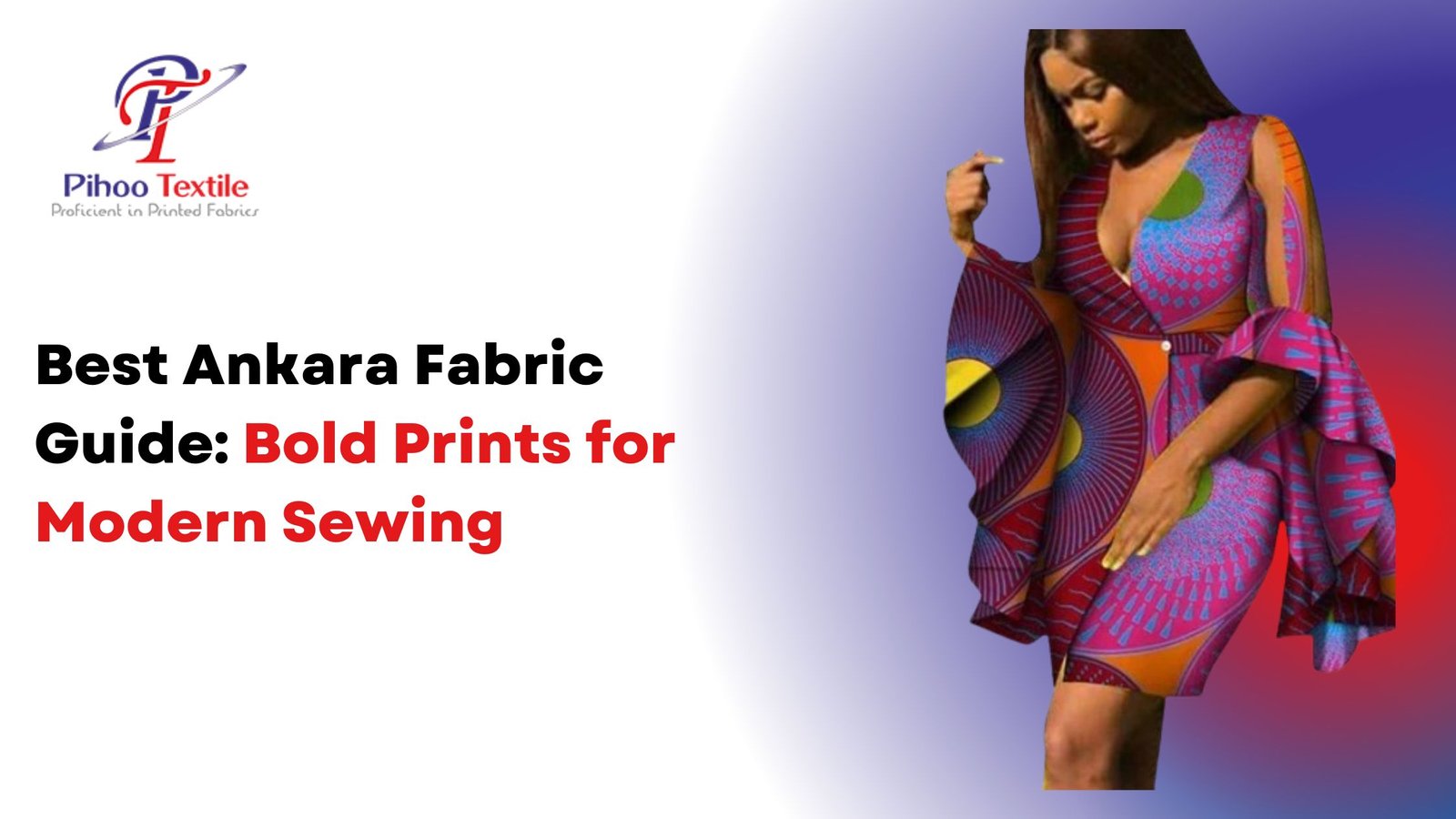
Best Ankara Fabric Guide: Bold Prints for Modern Sewing
Sewers can easily maximize the stunning look of Ankara fabric’s prints on the bolt when cut and sewn into garments. Correct pattern placement, colorfastness during pre-washing, and selecting the right fabric weight are key to a successful, bold creative choice in every finished piece.
The focus is understanding which Ankara types suit which sewing projects. Real wax prints handle differently than digital prints. A 140 GSM cotton drapes uniquely compared to 180 GSM. Pattern scale determines whether your design reads as intentional. Most sewing guides skip these technical details, assuming all Ankara behaves identically.
This guide covers Ankara fabric types, quality checks, matching prints to garment styles, and proper sewing techniques to ensure successful projects. It highlights common mistakes and the impact of fabric specifications on final results.
Understanding Ankara Fabric Types
Real Wax vs. Imitation Wax
Real wax prints use traditional resist-dyeing methods where wax applied to fabric creates characteristic crackle patterns during the dyeing process. The technique produces identical coloration on both fabric sides with subtle variations that prove authenticity. Real wax costs more but delivers superior colorfastness and fabric hand.
Imitation wax (fancy prints) uses direct printing methods that replicate wax aesthetics without the resist process. These prints show brighter colors on one side and duller reverse sides. Quality varies significantly—some imitations perform excellently while others fade after few washes.
Super Wax and Specialty Finishes
Super wax represents premium Ankara with finer cotton, tighter weaves, and more elaborate patterns. The fabric feels smoother, drapes better, and costs 30-50% more than standard wax prints. Designers targeting luxury markets or high-end custom work prefer super wax for its refined appearance.
Metallic and gold-wax Ankara incorporate metallic-look elements (not actual metal threads) that add visual richness. These work well for occasion wear but require gentle care—high heat and aggressive washing damage metallic effects faster than standard dyes.
Quality Markers That Matter
Cotton content determines sewing ease and garment comfort. Pure cotton Ankara (100%) accepts pins, stitches, and pressing better than poly-cotton blends. Blends resist wrinkles but can develop puckering along seams if tension settings aren’t adjusted for synthetic content.
Fabric weight affects drape and structure. Standard Ankara ranges 140-180 GSM. Lighter weights (140-150 GSM) suit flowing dresses, gathered skirts, and unstructured tops. Heavier weights (170-180 GSM) work for tailored pieces, structured jackets, and garments requiring body.
Here’s the contrarian insight: most sewers assume heavier always means better quality. It doesn’t. A poorly woven 180 GSM fabric performs worse than well-constructed 150 GSM material. Weave density matters more than weight alone.
Colorfastness testing reveals long-term performance. Rub a damp white cloth across the fabric surface. Color transfer indicates dye instability that will cause bleeding during washing. Skip fabrics that fail this simple test regardless of how appealing the pattern looks.
Choosing Prints for Your Projects
Pattern scale must align with garment size and viewing distance. Large-scale prints (motifs 8+ inches) suit maxi dresses, wide-leg trousers, and statement pieces where full pattern repeats display properly. These same prints overwhelm small accessories, children’s wear, and fitted garments where cutting fragments the design.
Small-to-medium repeats (2-6 inches) offer more flexibility. They work across garment categories without requiring careful pattern placement. First-time Ankara sewers achieve better results starting with medium-scale prints before attempting large dramatic patterns.
Directional vs. non-directional patterns affect fabric layout and yardage requirements. Directional prints (designs with clear up/down orientation) require all pattern pieces cut in the same direction, increasing fabric consumption. Non-directional geometrics and abstract patterns allow more efficient cutting.
Sewing Best Practices
Pre-wash Ankara in cold water before cutting. Most cotton Ankara shrinks 2-5% during first wash. Pre-washing prevents finished garments from becoming unwearably small after customer laundering. Air dry or use low heat to minimize shrinkage beyond normal cotton behavior.
Cut along the grain to maintain pattern consistency and prevent distortion during wear. Off-grain cutting causes twisted seams and wavy hems that no amount of pressing fixes. Mark grainlines clearly on pattern pieces before pinning to fabric.
Use sharp scissors or rotary cutters. Dull blades pull and stretch fabric during cutting, creating uneven edges that show in finished seams. Replace blades more frequently when cutting Ankara than solid fabrics—the heavier cotton and dye content dulls edges faster.
Interface strategically for structured garments. Ankara’s bold prints show through lightweight interfacing, creating muddy appearances. Use opaque white or cream interfacing for collars, cuffs, and facings where crisp structure matters without pattern show-through.
Common Project Mistakes
Pattern Clashing Within Garments
Mixing multiple Ankara prints in one garment rarely works unless you’re executing advanced design techniques. The visual complexity compounds—two busy patterns create chaos rather than interest. Use solid fabrics for contrast panels, linings, or trim when working with bold Ankara.
Ignoring Pattern Placement
Centered motifs look intentional. Off-center placement looks accidental. Plan pattern placement before cutting, especially for bodice fronts, skirt panels, and jacket backs where symmetry matters visually. Buy extra yardage (typically 0.5-1 yard) to allow pattern matching flexibility.
Wrong Thread Choices
Cotton thread works best with cotton Ankara. Polyester thread’s higher strength can pucker cotton fabric along seam lines. Match thread fiber content to fabric for balanced tension and seam performance. Use neutral colors (tan, gray, navy) that blend across Ankara’s multicolor patterns rather than attempting exact color matches.
Color Coordination Strategies
Ankara already provides built-in color palettes—extract accent colors from the print for solid companion pieces. A print containing yellow, blue, and white pairs naturally with solid navy trousers or yellow accessories. You don’t need external color theory—the print tells you what works.
Monochrome Ankara (single-color designs) offers styling versatility that multi-color patterns can’t match. These prints work in professional settings, coordinate easily with existing wardrobes, and appeal to buyers hesitant about bold color commitments. Don’t overlook monochrome when sourcing Ankara for conservative markets.
Conclusion
Quality Ankara sewing starts with proper fabric selection—match weight, pattern scale, and print type to your intended garment. Pre-wash, cut on grain, and plan pattern placement before making the first cut. Avoid mixing multiple prints and use appropriate interfacing for structured pieces. These fundamentals prevent the most common project failures.
Pihoo Textile supplies Ankara fabrics in multiple GSM weights with both traditional wax and digital print options. Our cotton-based materials feature colorfast dyeing, clear pattern printing, and consistent quality suitable for professional sewing and production work. Visit pihootextile.com to browse Ankara print collections, request fabric swatches showing different weights and pattern scales, or place bulk orders with flexible minimums. Source Ankara that sews reliably and delivers the bold visual impact your projects require.
