
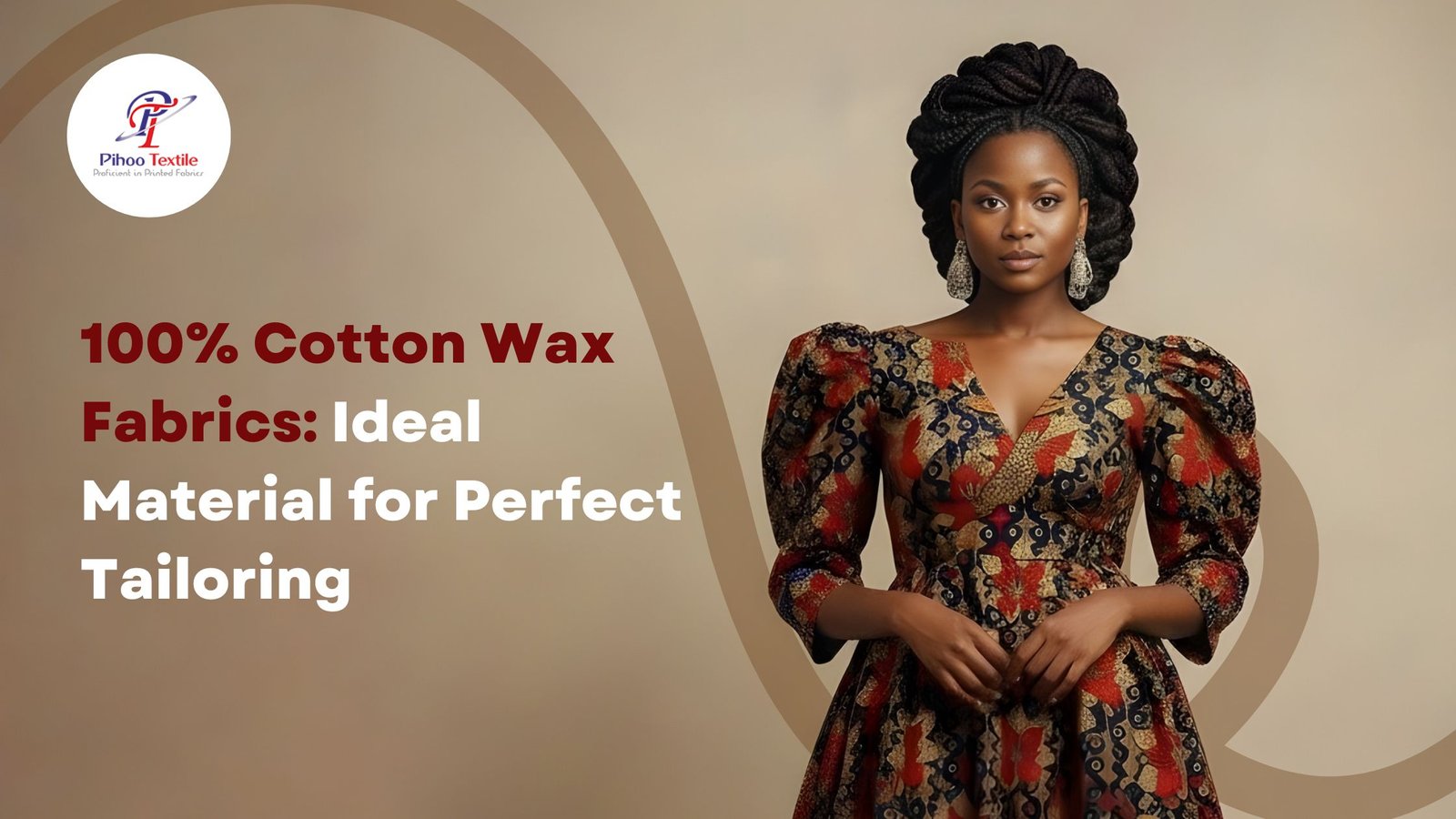
100% Cotton Wax Fabrics: Ideal Material for Perfect Tailoring
Introduction
Tailors lose money on wax print projects when they can’t distinguish quality fabric from cheap imitations. A client orders a custom dress, you cut and sew carefully, then the garment puckers at seams, loses shape after one wash, or fades within weeks. The problem isn’t your technique—it’s the fabric. Most “African wax print” sold today uses polyester blends or single-sided printing that behaves unpredictably under needle and iron. True 100% cotton wax fabric solves this through complete dye penetration, predictable pressing behavior, and structural integrity that holds pleats, darts, and clean seam lines. The cotton base breathes naturally, accepts standard tailoring techniques, and delivers garments clients wear repeatedly rather than abandon after disappointing performance. This guide explains what separates 100% cotton wax from inferior alternatives, why cotton matters specifically for tailoring outcomes, which garments benefit most, how to verify quality before cutting, and essential sewing considerations that prevent costly mistakes. Understanding these distinctions transforms problem fabrics into reliable materials that justify premium pricing.
What 100% Cotton Wax Fabric Actually Is
Wax print fabric originates from mechanized batik techniques where wax resists dye penetration during multiple immersion cycles. Molten wax gets applied to cotton through engraved copper rollers, the fabric passes through dye baths, then portions of wax get removed before adding subsequent colors.
This creates the defining characteristic: identical pattern visibility on both fabric sides. The dye penetrates completely through the cotton weave rather than sitting on the surface like screen printing or digital transfer.
The wax cracks during processing, allowing dye to seep through in irregular veining patterns. These “crackling effects” became the signature of authentic wax prints—perfectly uniform prints signal machine printing rather than wax-resist processing.
Standard specifications: 100% cotton base cloth, typically 45 inches (115cm) wide, sold in 6-yard bundles that represent one complete cloth. The fabric arrives with a slightly stiff, waxy finish that washes away on first cleaning.
Why Cotton Matters for Tailoring
Here’s what most tailors discover too late: fiber content determines whether precision techniques actually show in finished garments. A perfectly executed princess seam means nothing if the fabric doesn’t hold the line.
Cotton wax prints accept heat and steam pressing without melting, warping, or developing shine marks. This allows proper seam pressing, dart manipulation, and edge finishing—fundamental tailoring techniques that fail with synthetic fabrics.
The natural fiber breathability keeps clients comfortable during all-day wear. Polyester blends trap heat and moisture, causing discomfort that clients blame on garment construction rather than fabric choice.
Cotton’s mechanical properties provide predictable behavior under the sewing machine needle. The fabric doesn’t slip, stretch unexpectedly, or resist thread penetration the way slippery synthetics do.
Tailoring Advantages of Quality Wax Prints
Structure and Body
The medium weight of authentic cotton wax prints provides enough body to support structured garments without requiring excessive interfacing. Collars stand properly, peplums maintain shape, and fitted bodices hold their lines through wear.
The crisp yet soft hand creates garments that look intentional rather than limp. Skirts maintain A-line shapes, shirt dresses keep clean button plackets, and tailored separates retain pressed creases.
Two-Sided Quality
Because dye penetrates through the entire fabric, seam allowances and facings don’t reveal ugly white backing or faded wrong-side colors. This matters for unlined garments, rolled hems, and any construction where interior finishes show.
The visual depth creates richer appearance than surface-printed alternatives. Light interacts with dye embedded in fibers rather than sitting on top, producing more vibrant colors.
Durability for Repeat Wear
Dense cotton weave withstands repeated laundering without the pilling, thinning, or surface degradation common in cheaper alternatives. Garments maintain appearance through 50+ wears rather than looking shabby after ten.
Colors remain vibrant because dyes bond chemically with cotton fibers during the wax-resist process. This colorfastness prevents the rapid fading that undermines cheaper prints.
Best Applications for Tailored Garments
Women’s Structured Pieces
Shirt dresses with collar stands and button plackets benefit from cotton wax’s crisp behavior. The fabric holds collar shapes and maintains clean front openings without distortion.
Peplum tops require fabric with enough body to create the flared hip detail without flopping limply. Cotton wax delivers this structure while remaining comfortable against skin.
Fitted bodices, princess seam dresses, and tailored skirts all depend on fabric that holds pressed lines and accepts dart manipulation. Cotton wax performs predictably across these applications.
Men’s Tailored Casual Wear
Button-down shirts in cotton wax create distinctive casualwear that launders well and maintains collar integrity through multiple wearings. The breathability makes shirts comfortable for all-day office or weekend wear.
Lightweight unstructured jackets and casual blazers position tailors in heritage fashion markets with higher margins than standard garments.
Coordinated Sets and Occasionwear
Matching tops and bottoms require identical fabric from the same dye lot to ensure perfect color consistency. Cotton wax maintains this uniformity across pieces.
The combination of bold patterns, quality construction, and comfortable cotton creates occasionwear that clients actually wear repeatedly rather than reserving for single events.
Quality Verification Before Cutting
The Cotton Content Test
Request fiber composition documentation before purchasing. Labels can mislead, so ask for written specifications confirming 100% cotton.
Perform a simple burn test on a thread pulled from the selvage: cotton burns with paper-like smell and leaves soft gray ash. Polyester melts into hard black beads with chemical odor.
Pattern Visibility Check
Flip the fabric to examine the wrong side. Authentic wax prints show near-equal color intensity on both sides—sometimes with slight variation but never dramatic fading or white backing.
This single test eliminates most imitations immediately. Surface-printed fabrics reveal themselves through obvious wrong-side dullness.
Hand Feel Assessment
Quality cotton wax feels crisp when new due to residual wax coating, but not stiff like cardboard or plasticky like coated synthetics.
The fabric should have substance—hold a corner and let it drape naturally. It should support its own weight with moderate stiffness rather than collapsing limply.
Surface Quality Indicators
Examine print clarity under good lighting. Authentic wax shows sharp, clean motifs with defined edges. Cheap prints often display fuzzy or bleeding edges where colors blur together.
Look for characteristic crackling—fine irregular veining throughout the print where wax broke during dyeing. Too-perfect uniformity signals digital printing.
Essential Cutting and Sewing Considerations
Pre-Washing Protocol
Always pre-wash cotton wax before cutting patterns. The waxy finish affects drape, stiffness, and sizing. Cold water wash removes this coating and accounts for cotton shrinkage.
Cotton wax can shrink up to 10% on first wash—a significant amount that ruins garments if not planned for. Buy 10-15% extra yardage and pre-wash everything before cutting.
After washing, the fabric softens noticeably and reveals true colors and hand. This represents the state clients experience after their first cleaning—better to work with reality from the start.
Pattern Placement Strategy
The narrow width (typically 45 inches) requires careful layout planning. More fabric gets consumed by pattern matching and directional prints than with standard 60-inch cottons.
Plan layouts to match pattern repeats at side seams, center back, and across bodice yokes. This attention to continuity elevates work from adequate to exceptional.
Center dominant motifs on visible garment areas—front bodices, pocket flaps, collar points—rather than letting them fall randomly.
Pressing and Finishing
Cotton wax accepts standard pressing techniques. Use medium-high heat (cotton setting) with steam for best results. Press seams open or to one side as construction requires.
The fabric responds beautifully to edge pressing, creating crisp hems, facings, and topstitching guides. This predictability allows standard tailoring approaches without special accommodation.
FAQs
Q: Why does 100% cotton wax cost more than polyester “African print”?
A: The wax-resist dyeing process requires multiple steps—wax application, dye immersion, wax removal, repeat for each color. This labor-intensive method costs more than single-pass digital printing on polyester. Additionally, quality cotton base cloth costs significantly more than synthetic fabric. The price difference reflects actual production complexity, not arbitrary markup. You’re paying for fabric that performs predictably under tailoring techniques and wears well long-term.
Q: Can I mix cotton wax with other cotton prints in one garment?
A: Yes, as long as weights and hand feel match reasonably well. Use cotton wax for main body panels and coordinate with solid cotton twill or broadcloth for facings, bindings, or contrast details. Pull accent colors directly from the wax print to maintain visual cohesion. Avoid mixing with synthetics—the different pressing requirements and drape characteristics create construction problems and uncomfortable wear.
Q: How do I prevent the stiff finish from damaging my sewing machine needle?
A: Pre-wash before sewing. The waxy coating that makes new fabric stiff washes away completely in cold water, revealing the soft cotton underneath. Once pre-washed, cotton wax sews like any quality cotton—no special needles required. Use standard sharps or universal needles in size 80/12 or 90/14 depending on fabric weight. The pre-washing step also prevents shrinkage surprises in finished garments.
Q: Does cotton wax work for both fitted and flowing styles?
A: Absolutely. The medium weight and crisp hand support structured fitted garments—darts, princess seams, set-in sleeves—while also draping beautifully in gathered or flowing silhouettes. The versatility comes from the balanced weight and cotton’s natural flexibility. Choose your silhouette based on design goals, not fabric limitations. Cotton wax adapts across style categories better than most specialty fabrics.
Q: Should I finish seams differently for cotton wax than regular cotton?
A: No special treatment needed. French seams work beautifully for clean interiors in unlined garments. Flat-felled seams suit casual shirts and structured pieces. Standard serging or zigzag finishing prevents fraying adequately. Because the pattern shows equally on both sides, seam allowances don’t create ugly white lines visible through sheer fabrics. Use your standard cotton finishing techniques with confidence.
Q: How do I calculate yardage when fabric is only 45 inches wide?
A: Use pattern envelope yardage requirements for 45-inch fabric width, then add 10-15% for pre-wash shrinkage and another 15-20% for pattern matching if working with large-scale prints. For example, if a pattern calls for 2.5 yards at 45-inch width, buy 3.25-3.5 yards to cover shrinkage and matching. This sounds like waste, but proper matching creates professional results that justify the investment. Under-buying forces compromises that undermine your craftsmanship.
Conclusion
100% cotton wax fabric delivers the structural behavior, pressing predictability, and wearing comfort that perfect tailoring requires. The wax-resist dyeing creates two-sided color depth that flatters construction details while the cotton base accepts every standard technique in your skillset. Quality cotton wax costs more because it performs better—fewer fitting adjustments, cleaner construction, happier clients.
Verify cotton content before cutting. Pre-wash to reveal true fabric behavior. Build garments that showcase your tailoring expertise.
Pihoo Textile sources exclusively 100% cotton wax print fabrics with verified fiber content and authentic wax-resist processing. Every print in our tailoring collection features the two-sided color penetration, characteristic crackling, and medium weight that professional garment construction demands.
We curate patterns specifically for structured tailoring rather than offering random prints. Our selection emphasizes versatile geometrics and florals that work across multiple garment types while maintaining the pattern matching registers tailors need for professional finishing. Each fabric listing includes complete specifications—fiber content, width, weight, and repeat dimensions—so you can plan cutting layouts and calculate accurate yardage before ordering.
Sample swatches ship within 48 hours for physical testing. Bulk orders arrive with consistent dye lots suitable for coordinated sets and multi-garment commissions. No surprises about hand feel or color when production yardage arrives—what you sample is exactly what you receive.
Visit pihootextile.com to explore our 100% cotton wax print collection for bespoke and production tailoring. Filter by pattern scale, color family, and design style. Build your reputation on fabrics that behave predictably, press cleanly, and wear beautifully—because perfect tailoring starts with perfect materials.
