
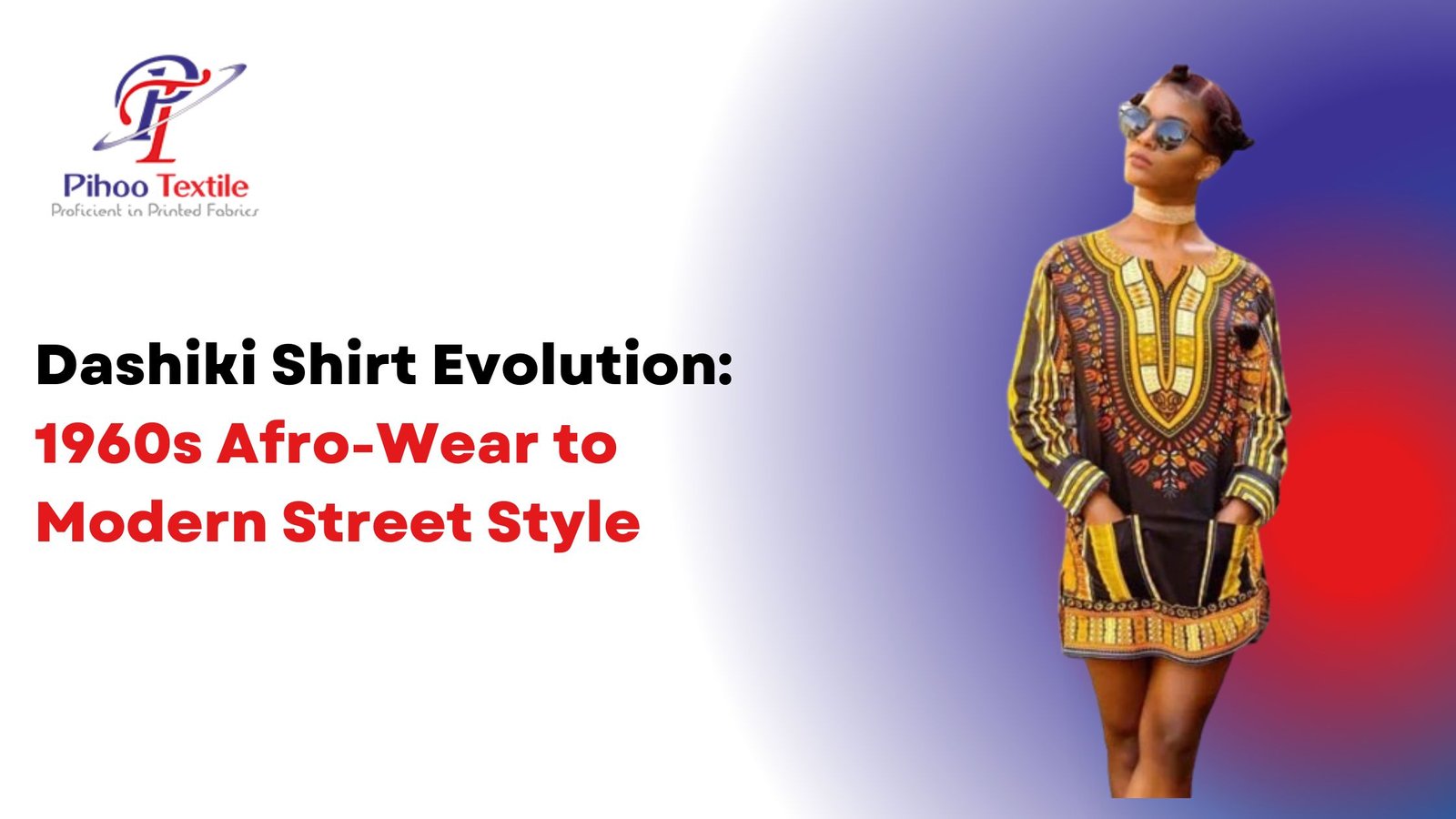
Dashiki Shirt Evolution: 1960s Afro-Wear to Modern Street Style
Most fashion historians credit the 1960s Civil Rights Movement with popularizing the dashiki. They’re half right. The garment existed for centuries in West Africa as a practical underlayer called “dan ciki” in Hausa—literally “shirt of the inner body.” What changed in the 1960s wasn’t the dashiki’s existence but its meaning.
A Dutch designer named Toon van de Manakker created the “Angelina” pattern in the 1960s, inspired by Ethiopian tunics he encountered. This geometric design—now considered the quintessential dashiki look—originated in Europe, not Africa. Mass production followed through Harlem’s New Breed Clothing Ltd, transforming a utility garment into a political statement, then a hippie trend, and now a streetwear staple.
This guide traces the dashiki’s path from West African practicality through Civil Rights activism to modern street style. You’ll learn how each era reshaped the garment’s cut, significance, and wearers, plus how to identify authentic construction versus mass-market imitations.

West African Roots?
The Yoruba word “dansiki” described loose-fitting cotton tunics worn across West Africa for centuries. Hot, humid climates demanded breathable clothing that didn’t restrict movement during farm work or daily activities. The original design featured deep armholes, side pockets, and simple construction—function over form.
These early garments used locally woven cotton in solid colors or minimal patterns. Embroidery remained understated compared to today’s elaborate neck panels. The cut prioritized airflow and comfort for manual labor in tropical heat.
The dashiki served as an inner layer beneath heavier outer robes during formal occasions. Its status as underwear in traditional contexts makes its later elevation to political symbol particularly striking. What West Africans wore hidden beneath other clothes became what activists wore openly as statements.
1960s Civil Rights Era
After the Civil Rights Act passed in 1964, African Americans sought visible markers of cultural identity beyond legislative victories. The dashiki provided exactly that—an African garment that rejected Western suit-and-tie conformity while asserting Black heritage and pride.
Leaders like Stokely Carmichael and Huey P. Newton wore dashikis during protests and public appearances. The garment signaled alignment with Black Power philosophy and pan-African consciousness. Wearing a dashiki to work, school, or rallies made a political statement without saying a word.
Here’s the uncomfortable reality: most dashikis worn during this era weren’t imported from Africa. Mass production happened in Harlem using fabrics printed with “African-inspired” designs. Authenticity mattered less than symbolism—the act of wearing distinctly non-Western clothing carried the political weight.
Counterculture Crossover
By the late 1960s, white hippies adopted dashikis as part of broader anti-establishment fashion. They saw the garment through a different lens—ethnic exoticism and rejection of mainstream American culture rather than specific Black identity politics.
This crossover diluted the dashiki’s original Civil Rights symbolism. What began as a marker of African American pride became a generalized “alternative” fashion choice available to anyone seeking bohemian credentials. Department stores stocked dashikis alongside tie-dye and bell-bottoms.
Southeast Asian manufacturers capitalized on growing demand by producing cheap dashikis that undercut African craftspeople. The irony: a garment meant to celebrate African heritage got mass-produced in factories thousands of miles from both Africa and the communities who gave it political meaning.
Design Evolution Through Decades
1970s Adaptations
Designers expanded beyond traditional tunics to create dashiki dresses, caftans, and women-specific cuts. The garment shed its exclusively masculine associations. Fashion magazines featured dashikis in editorial spreads, completing the journey from political statement to mainstream trend.
Embroidery grew more elaborate. V-neck panels displayed increasingly complex geometric patterns in metallic threads. Sleeve lengths varied from short to long. The silhouette remained loose but tailoring improved over earlier rough-cut versions.

1980s-2000s Decline
Dashikis largely disappeared from everyday street style during these decades. They persisted in specific contexts—cultural celebrations, African American festivals, and formal occasions like weddings. The garment retained ceremonial significance even as casual wear shifted elsewhere.
Celebrity influence kept dashikis visible but sporadic. When Beyoncé or Rihanna wore dashiki-inspired pieces, media coverage spiked temporarily. These moments demonstrated ongoing cultural relevance without translating to sustained street-level adoption.
Modern Streetwear Integration
Contemporary fashion treats dashikis as raw material for hybrid designs rather than preserving traditional silhouettes. Designers cut dashiki fabric into bomber jackets, hoodies, joggers, and fitted shirts. The patterns remain but the construction adapts to current streetwear aesthetics.
Oversized longline dashikis pair with skinny jeans, sneakers, and snapback caps—a combination that would confuse both 1960s activists and traditional West African wearers. This styling approach prioritizes visual impact over historical accuracy.
Festival culture embraced dashikis as bold statement pieces. Music events, particularly those celebrating Black culture or Afrobeat, see concentrated dashiki wearing. The garment signals cultural awareness and style confidence in these contexts.
Unisex appeal now defines dashiki marketing. Gender-neutral sizing and styling remove the masculine associations from earlier eras. Women wear dashikis as dresses, tops, or layering pieces without requiring separate “women’s versions.”
Spotting Authentic Construction
Quality dashikis use substantial cotton or cotton-blend fabrics with visible texture and weight. Thin, synthetic-feeling material indicates cheap production focused on appearance over durability. Touch reveals quality immediately.
V-neck embroidery should show clean, tight stitches in symmetrical patterns. Printed “embroidery” that’s actually ink on fabric fades quickly and lacks the dimensional texture of real threadwork. Run your fingers across the neckline—you should feel raised stitching.
Pattern edges determine print quality. Sharp, clear lines indicate proper fabric printing. Blurry or bleeding colors suggest rushed production with inferior dyes. These dashikis lose vibrancy after few washes.
Check seam construction along sides, shoulders, and sleeves. Reinforced stitching prevents unraveling. Single-thread seams with loose tension signal garments that won’t survive regular wear.
 Conclusion
The dashiki moved from West African utility garment to Civil Rights symbol to hippie fashion to modern streetwear—each era reshaping its meaning while maintaining visual distinctiveness. Today’s versions blend traditional patterns with contemporary cuts that suit current style preferences.
Pihoo Textile supplies authentic African print fabrics suitable for traditional and modern dashiki construction. Our cotton materials feature sharp pattern printing, quality dyeing, and weight appropriate for both casual and formal garments. Visit pihootextile.com to explore dashiki fabrics, request samples, or discuss custom printing for unique designs. Source materials that respect the garment’s evolution while meeting contemporary quality standards.
