
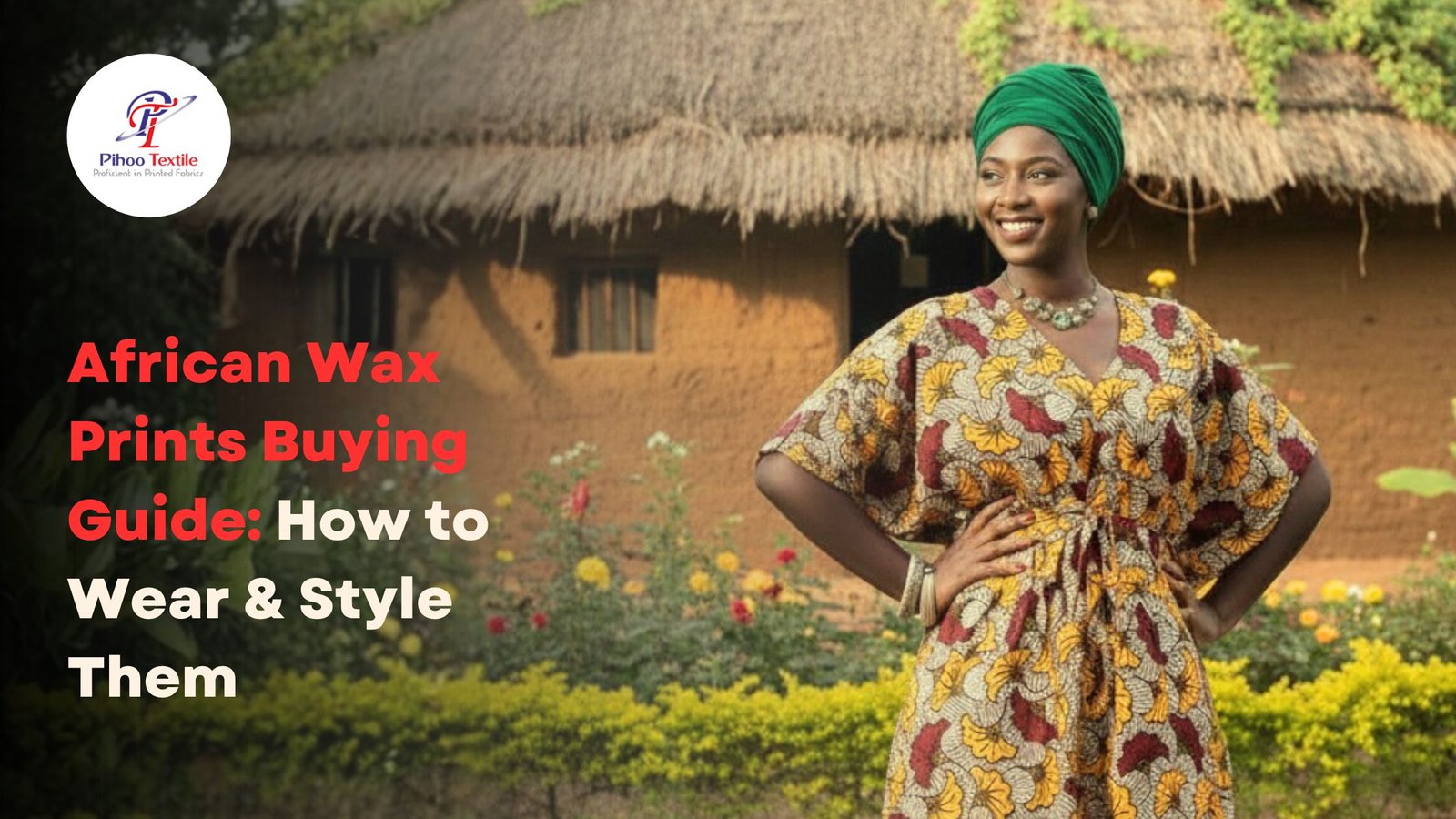
African Wax Prints Buying Guide: How to Wear & Style Them
Introduction
Most people admire African wax prints on others but freeze when it comes to wearing them themselves. The patterns feel too bold, the styling rules feel unclear, and the fear of getting it wrong keeps beautiful fabric in someone else’s wardrobe. Here’s the uncomfortable truth: the hesitation rarely comes from the prints themselves—it comes from buying the wrong quality fabric and having no clear outfit formula to follow. Cheap imitations that feel stiff, plastic, or visually chaotic are the real culprits behind bad experiences. Authentic 100% cotton wax prints behave completely differently. They drape well, press cleanly, and pair naturally with everyday basics. This guide walks through how to identify quality wax print fabric before buying, how to build outfits around prints using simple formulas, how to mix patterns without visual chaos, and which beginner mistakes to avoid. Follow these steps and the prints stop feeling intimidating.
What African Wax Prints Are
African wax print—also called Ankara or Dutch Wax—is 100% cotton fabric produced through wax-resist dyeing. The wax process creates identical pattern visibility on both fabric sides and produces the characteristic crackling effect that distinguishes genuine prints from surface-printed imitations.
These differ from other “African prints” like Kente (handwoven strips), Adire (resist-dyed indigo), or lace fabrics. Wax print is the printed cotton category—bold motifs, geometric patterns, and vibrant colors in repeating designs.
Standard format: 6-yard pieces, roughly 45 inches (115cm) wide, with mirrored motifs designed for garment cutting.
How to Choose Quality Fabric
Cotton Content and Feel
Only buy 100% cotton. Polyester blends feel plastic against skin, trap heat, and resist pressing—three qualities that undermine both comfort and styling.
Real cotton wax print feels crisp when new (from residual wax coating) but not cardboard-stiff or slippery. After pre-washing, it softens significantly while maintaining enough body to hold garment shapes.
Print Quality Markers
Check these before purchasing:
- Flip the fabric—both sides should show near-identical color intensity
- Motif edges should be sharp and clean, not fuzzy or bleeding
- Look for characteristic crackling (irregular dye veins throughout)—perfect uniformity signals digital printing
Online Shopping Precautions
Request close-up photography showing the full repeat pattern and reverse side. Confirm fiber content in writing before ordering. Ask about return policy specifically for quality issues.
Print Scale, Color and Personal Style
Large-scale motifs suit looser silhouettes—maxi dresses, wide-leg trousers, full skirts where the design displays fully. Smaller, tighter patterns work better in fitted garments where seams interrupt the repeat.
Start with two-to-three color prints if you’re new to wax prints. Earth tones, black-and-white, or navy-based prints integrate more easily with existing wardrobes than five-color maximalist designs.
Pull one accent color from the print for shoes, bag, or accessories. This creates intentional coordination without requiring additional patterns.
Start Small and Build Up
The fastest path to confidence with wax prints: one print piece, everything else neutral. This approach works across skill levels and body types.
Easy entry points:
- A print skirt paired with a white shirt
- A wax blazer over dark jeans and a plain tee
- A headwrap or structured bag introducing the pattern
Once comfortable, layer two prints by ensuring they share at least one common color and differ in scale—one large motif paired with one smaller geometric pattern.
Everyday Outfit Formulas
These combinations work across contexts without requiring styling expertise:
- Print skirt + white shirt or black polo: classic balance, works for office and casual
- Wax blazer + jeans + plain tee: smart casual that grounds the print in familiar silhouette
- Wax shirt dress: single-piece outfit, belt at waist for structure
- Print top + solid wide-leg trousers: same color family, different textures
Seasonal layering: add tights, ankle boots, and a solid cardigan over wax print dresses for cooler months.
Mixing Prints
The one-color rule prevents visual chaos: any two prints you combine must share at least one common color. Without this anchor, the eye has nothing to rest on.
Scale contrast matters equally. Pair a large-scale floral wax print with a small geometric pattern rather than two large-scale designs fighting for attention.
Signs you’ve gone too far: statement shoes competing with the print, heavy jewelry adding a third visual layer, or accessories in colors not present anywhere in the fabric. Remove one element and reassess.
Cultural Respect When Buying
Many wax print designs carry embedded meanings—specific patterns communicate relationships, social commentary, or cultural milestones in West and East African communities. Wearing a pattern while understanding its origin requires no credentials, but basic research adds depth to the choice.
Support businesses with transparent supply chains and direct connections to African textile traditions when possible. Ask where fabrics are sourced and manufactured—legitimate sellers answer clearly.
Common Beginner Mistakes
These errors create bad experiences and unfair conclusions about wax prints:
- Wearing everything bold at once: statement print, bold shoes, heavy earrings, bright lips—pick one focal point
- Buying synthetic “African print”: the fabric fails before styling starts; cheap imitations feel wrong and photograph poorly
- Ignoring fit: a beautifully printed garment that doesn’t fit well looks worse than a perfectly fitted solid
- Saving prints for special occasions: wax prints worn daily feel natural; reserved only for events, they stay intimidating
FAQs
How do I know if wax print fabric will work for my skin tone?
Any skin tone can wear wax prints—the styling variables matter more than undertone matching. Warm-toned prints (oranges, yellows, earthy reds) suit warm complexions particularly well. Cool-toned prints (deep blues, purples, black-and-white) work across all complexions. Start with prints containing three or fewer colors to simplify coordination before experimenting with vibrant multi-color designs.
Can I wear African wax prints to a professional office environment?
Yes. The silhouette determines formality more than the print itself. A well-fitted wax print blazer over tailored trousers reads professional. A wax print sheath dress with minimal accessories works for corporate settings. Choose smaller-scale patterns in darker colorways for conservative workplaces. Large florals and five-color prints suit creative industries better than finance or law environments.
Is it cultural appropriation for non-Africans to wear wax prints?
Context and intention determine the answer. Wearing prints while understanding their origins and supporting legitimate suppliers represents cultural appreciation. Treating the fabric as exotic costume without any awareness of its history and meaning crosses into appropriation. The distinction lies in respect and informed choice rather than ethnic background.
What accessories work best with bold wax prints?
Minimal and neutral. Simple gold or silver jewelry without competing colors. Nude, black, or white footwear. A solid-colored bag in one of the print’s accent colors. The print does the visual work—accessories should support rather than compete. Exception: when wearing a neutral outfit with one small wax print accessory, slightly bolder accessories can work.
How much fabric do I need for a basic garment project?
A simple dress requires 2.5-3 yards at 45-inch fabric width. Add 15-20% for pattern matching if working with large-scale motifs—matching repeats at seams consumes extra yardage. A blouse needs 1.5-2 yards. Always pre-wash before cutting to account for cotton shrinkage of up to 10% on first wash, which affects final measurements significantly.
Conclusion
Quality fabric solves half the styling problem before you touch scissors or thread. Start with one print piece, keep everything else neutral, and let the pattern carry the visual weight. Build from there as your eye develops. The outfit formulas in this guide work precisely because they’re built on principles, not trends.
Buy one quality print this week. See how it changes your relationship with the entire category.
Pihoo Textile sources authentic 100% cotton wax prints with verified double-sided printing, characteristic crackling, and medium weight that performs well for both sewing and ready-to-wear styling. We provide complete specifications for every fabric—fiber content, exact width, GSM, and care requirements—so you make informed purchasing decisions rather than guessing.
Our curated selection emphasizes prints that photograph clearly, coordinate naturally with neutrals, and sew predictably—whether you’re a designer cutting garments or a stylist building outfits from finished pieces. Every listing includes high-resolution photography showing full repeat patterns and reverse-side quality so online buying matches what arrives.
Visit pihootextile.com to explore our African wax print collection organized by color family, pattern scale, and motif type. Request samples to test quality before committing to full yardage. Start with one print that matches your existing wardrobe—and build from there.
