
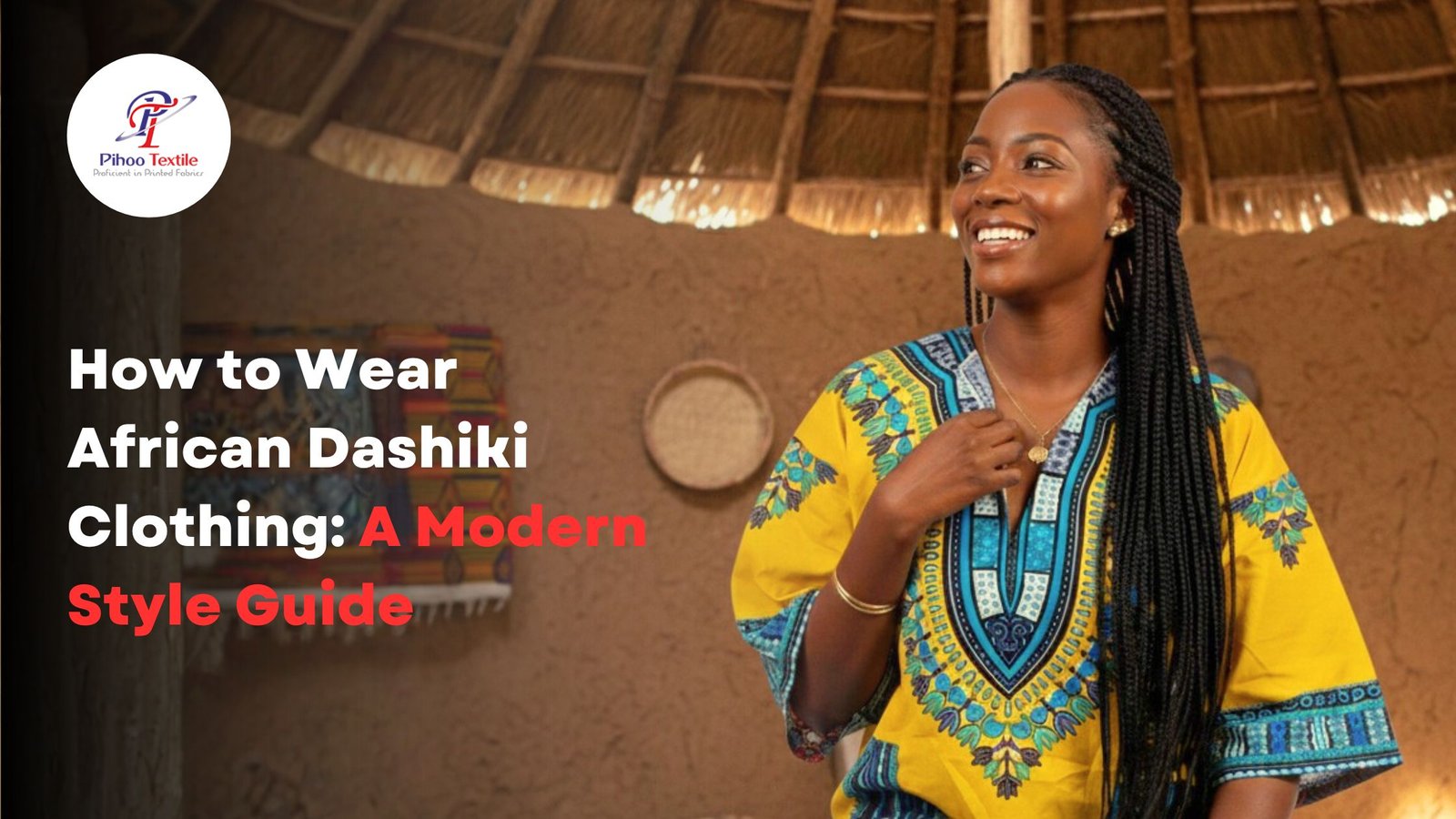
How to Wear African Dashiki Clothing: A Modern Style Guide
Most people who own a dashiki wear it once to a cultural event and then leave it sitting in the wardrobe. This happens not because the garment lacks versatility, but because nobody explains how to integrate it into everyday and formal contexts beyond its ceremonial associations. The result? A deeply expressive textile that rarely gets the wardrobe rotation it deserves.
The dashiki originates in West Africa, where it functioned as everyday attire for men across Nigeria, Ghana, and Senegal. Its V-neck embroidered collar, loose silhouette, and bold pattern vocabulary make it one of the most adaptable garments in African fashion—yet most styling content treats it as a costume rather than a wardrobe staple. This guide covers fit and fabric selection, gender-specific casual and formal outfits, layering techniques, accessories, and fabric care—giving you a complete framework for wearing dashiki confidently in any setting.
Dashiki Basics: Fit, Fabric, and Pattern
Dashiki comes in several distinct forms that suit different occasions and body types.
- Shirts and tunics: Hip-length, worn over trousers or jeans—the most versatile entry point
- Long tunics: Knee-length options that work as dresses or extended tops
- Full dresses and gowns: Floor-length for formal occasions
- Coordinated sets: Matching shirt and trouser combinations for complete looks
Fabric selection determines wearability. 100% cotton breathes well and holds vibrant prints through repeated washing. The contrarian insight? Heavier cotton (180-200 gsm) actually drapes better on loose silhouettes than lightweight fabric, which can look shapeless rather than relaxed.
Pattern scale matters for proportion. Large, high-contrast prints suit taller frames; smaller, tonal patterns work better for petite builds.
Casual Daytime Looks for Men
The simplest entry point pairs a dashiki shirt with well-fitted dark jeans and clean white sneakers.
This combination lets the print carry visual weight while neutral bottoms prevent the outfit from feeling overwhelming. Chinos in olive, khaki, or charcoal work equally well—the key is keeping below-the-waist pieces simple and solid.
Men’s Casual Footwear Options
- White or neutral sneakers for relaxed street looks
- Leather sandals for warm-weather occasions
- Chelsea boots when the temperature drops
Avoid heavily patterned shoes. The dashiki already carries the visual work—footwear should ground rather than compete.
Casual Daytime Looks for Women
Women have more structural flexibility with dashiki styling.
A dashiki top tucked loosely into high-waisted jeans or a midi skirt creates a balanced silhouette. Wearing it as an untucked tunic over fitted leggings leans casual. Dashiki dresses with flat sandals or espadrilles work for warm-weather daytime events without effort.
A headwrap in a complementary or matching fabric elevates the look immediately. Minimal jewelry—small hoops, a simple chain—keeps the print as the focal point.
Formal and Evening Looks for Men
Tailored dashiki shirts paired with well-cut dress trousers shift the entire register of the garment.
Oxford shoes or clean loafers complete the transition from casual to formal. For significant events—weddings, graduations, celebrations—coordinated dashiki suits with matching trousers in the same print deliver maximum impact without requiring external accessories for polish.
Keep accessories restrained: a watch and simple leather belt work. Heavy jewelry competes with detailed embroidery around the collar, which is the garment’s signature design element.
Formal and Evening Looks for Women
Floor-length dashiki gowns work for formal events without modification.
Pair them with block heels rather than stilettos—the cultural weight of the garment suits grounded, confident footwear. For semi-formal contexts, a dashiki top with a tailored pencil skirt and structured bag creates a professional look that reads as intentional rather than casual.
Bold statement earrings work well here because the garment’s neckline typically features embroidery that frames the face and draws attention upward.
Layering Techniques
Layering extends dashiki’s seasonal range and stylistic reach.
- Denim jacket over a dashiki shirt reads casual and contemporary
- Structured blazer in a neutral tone elevates a dashiki to smart-casual territory
- White crew-neck t-shirt worn under a dashiki adds texture contrast and covers the arms in conservative settings
- Hoodie underneath for winter adds warmth without hiding the dashiki’s collar detail
The rule: layer with solid-colored pieces only. Patterned outerwear over a dashiki creates visual noise rather than intentional styling.
Accessories That Complete the Look
Accessories determine whether a dashiki outfit looks considered or thrown together.
- Belts: Define the waist on long tunics and dresses; use leather in brown or black
- Bags: Leather totes or woven natural-fiber bags complement the organic feel of wax prints
- Hats: Kufi caps reinforce the African aesthetic; wide-brim hats work for outdoor events
- Jewelry: Single statement piece maximum—choose one focal point
The most common mistake? Over-accessorizing. A dashiki already carries significant visual complexity. Adding too many accessories overwhelms rather than complements.
Dashiki Fabric Care
Maintaining print vibrancy requires consistent care practices.
Wash dashiki garments in cold water on a gentle cycle, separately from other clothing during the first three washes to prevent dye transfer. Avoid bleach entirely—it degrades both cotton fibers and reactive dyes used in wax printing. Line dry in shade rather than direct sunlight, which fades print colors faster than washing. Iron on medium heat while slightly damp for best results on cotton.
Sourcing Quality Dashiki Fabrics
Designers and fashion brands creating dashiki garments need fabrics that maintain print clarity and color intensity through construction and repeated wear.
Quality dashiki fabric requires high-density 100% cotton (minimum 160 gsm), vibrant wax-resist printing with double-sided color penetration, and stable colorfastness ratings that survive commercial garment production processes. These specifications separate fabrics suited for finished garments from display-quality prints that deteriorate after construction.
Conclusion
Dashiki’s styling range extends far beyond cultural events. Pairing it correctly with solid-colored basics, appropriate footwear, and restrained accessories transforms it into a year-round wardrobe asset for both casual and formal contexts.
Pihoo Textiles manufactures premium African wax print fabrics for dashiki garments and fashion production at our Jetpur, Gujarat facility. Our 100% cotton base materials and authentic wax-resist printing deliver the color vibrancy, fabric weight, and durability that dashiki construction demands.
Request fabric samples from our African wax print collection at pihootextile.com, or contact our export team to discuss bulk orders and custom pattern development for your dashiki line.
