

Introduction
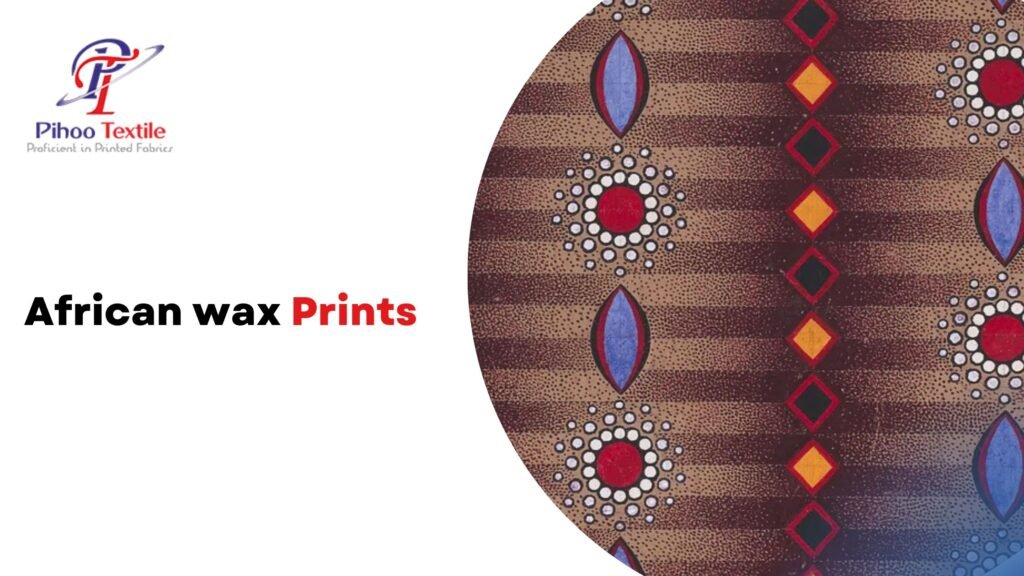
The single biggest mistake buyers make with African wax prints is assuming all versions are equivalent. They are not. The market splits into real wax prints, fancy prints, and premium super wax — three categories with meaningfully different production methods, durability profiles, and price points. A buyer who picks up a cheap fancy print expecting real wax performance ends up with a faded, single-sided fabric that loses its vibrancy within months. The design vocabulary of African wax prints — bold geometric patterns, cultural motifs, and the distinctive crackle effect — only delivers its full impact when the underlying production quality holds up through regular use.
This guide details African wax prints, their history, and quality standards. You will learn to identify authentic fabrics, work with them effectively, and apply care instructions to maximize their lifespan for confident sourcing.
What African Wax Prints Are
Wax-Resist Cotton Construction
African wax prints are 100% cotton fabrics produced using an industrial wax-resist dyeing process. Manufacturers apply melted wax or resin to both fabric sides using engraved copper rollers, then immerse the cloth in dye baths. Waxed areas repel color; exposed cotton absorbs it. This process repeats for each color in the design, creating layered patterns with depth that single-pass printing cannot achieve.
Ankara, Dutch Wax, and Related Names
The same fabric category goes by several names depending on context:
- Ankara — the most widely used term across West Africa and the global diaspora
- Dutch wax — references the fabric’s 19th-century European production origins
- Kitenge — common term in East African markets
- Hollandaise — French-speaking West African markets
These terms describe the same production category, not meaningfully different products.
History and Origins
Indonesian Batik to Dutch Industry
The wax-resist technique came directly from Indonesian batik, a centuries-old tradition of hand-applying wax to fabric before dyeing. Dutch manufacturers mechanized this process in the 1850s using copper rollers, intending to sell the output to Indonesian markets at lower cost than hand-made batik.
The West African Pivot
Indonesia rejected the mechanized fabrics because the industrial process created crackle lines — fine dye penetrations through wax cracks — that traditional batik makers considered defects. Dutch traders redirected their inventory to West African ports starting in the 1880s. West African buyers treated the crackle effect not as a flaw but as a quality indicator, a perception that remains accurate — it signals proper wax application on both fabric sides.
Cultural Embedding
West African women drove adoption by assigning local names and meanings to specific patterns, transforming commercial textiles into cultural communication tools. By the mid-20th century, African-owned factories produced continent-specific designs. The fabrics shifted from imported goods to cultural heritage over roughly 80 years of social integration.
Types of African Wax Prints
The market currently divides into three production tiers:
- Real wax prints — wax applied both sides, crackle effect present, identical front-back vibrancy, 150-180 GSM, most expensive
- Fancy prints — roller-printed on one side only, no crackle, lower GSM, significantly cheaper
- Super wax / premium wax — finest cotton base, highest color saturation, most intricate designs, commands the highest price
Knowing this split prevents the most common sourcing error: paying real-wax prices for fancy-print fabric.
How to Identify Quality Fabric
Three checks cover most quality verification needs:
- Both-sides test — fold fabric face-to-face and compare color intensity. Real wax shows identical vibrancy on both surfaces. Fancy prints show one dull side.
- Crackle check — look closely at solid-color areas. Fine irregular lines running through the color indicate proper wax-resist production.
- Selvage inspection — authentic fabric carries printed manufacturer information, design registration numbers, and quality tier markings along the edge.
Weight matters too. Real wax prints feel substantially heavier than standard cotton. If a bolt feels light and limp, the GSM is likely below 130 — too low for structured garment work.
How to Work With Wax Prints
Pre-Washing and Pressing
Always pre-wash before cutting. Cotton wax prints shrink up to 10% in the first wash — cutting before washing produces garments that misfit after their first laundry cycle. Wash at 40°C with mild detergent, then press with steam while still slightly damp. The fabric softens noticeably after this stage, improving drape for fitted pieces.
Pattern Matching
Wax print patterns have large repeats — often 20-30cm — that require deliberate matching across seams. Identify the repeat length before calculating fabric quantities. Add one full repeat length per major pattern piece to your yardage estimate to ensure alignment at side seams, shoulder seams, and center fronts.
Grain Direction and Fabric Layout
Some wax print designs are directional — the motifs read correctly only from one orientation. Lay all pattern pieces in the same direction before cutting. Breaking this rule produces garments where pattern elements point in opposite directions across seams, a visible error that wastes the fabric’s design investment.
What to Make With Wax Prints
The fabric’s 150-180 GSM weight makes it versatile across project categories:
- Structured garments — jackets, tailored trousers, A-line skirts, and fitted dresses that hold shape without additional interfacing
- Flowing garments — wrap dresses, wide-leg pants, and dashikis where the fabric’s natural drape defines the silhouette
- Accessories — bags, clutches, and headwraps where stiffness provides form without support layers
- Home décor — cushion covers, table runners, and upholstery for accent furniture pieces
Wax prints work poorly for bias-cut garments requiring extreme drape, and for sheer layering projects — the weight and opacity work against these applications.
Care and Maintenance
Follow these steps to preserve color and fabric structure:
- Wash separately at 30-40°C using pH-neutral detergent for the first three washes
- Select gentle or non-spin machine cycles; hand washing preserves vibrancy longer
- Air dry away from direct sunlight — UV exposure degrades dye bonds over time
- Iron face-down on medium heat to protect surface patterns from direct heat
- Store rolled rather than folded to prevent permanent creases in the wax finish
Avoid bleach, fabric softeners, and temperatures above 40°C, all of which degrade the wax-resist dye bonds that give authentic fabric its color permanence.
Buying Tips for First-Time Buyers
Most first-time buyers underestimate how much fabric they need. Use these starting points:
- Standard dress or top: 2.5-3 meters
- Maxi dress or full skirt: 3.5-4 meters
- Dashiki or loose shirt: 2.5 meters
- Large cushion cover pair: 1 meter
- Tote bag: 0.5-0.75 meters
Always add 0.5 meters to any estimate when working with large-repeat patterns. Request physical samples before bulk orders to verify both-sides color and actual GSM rather than relying on product descriptions alone.
FAQs
Why does some wax print fabric feel stiff when new?
The stiffness comes from residual wax compounds and dye saturation in the cotton fibers. Pre-washing removes this initial stiffness while preserving color integrity. The fabric softens significantly after the first wash and continues softening with use, eventually achieving a hand feel closer to well-worn cotton.
Can I mix different wax print patterns in one outfit?
Yes, pattern mixing works when designs share at least one common color. Pair patterns of different scales — a large floral with a small geometric — rather than two large-scale patterns competing for visual attention. Hold fabrics together before cutting to assess whether the combination reads as deliberate rather than accidental.
What causes wax print fabric to fade unevenly?
Uneven fading typically signals a fancy print rather than real wax. Fancy prints apply color to one surface only, so surface abrasion and washing expose the uncolored fiber underneath unevenly across the fabric. Real wax prints with color penetrating both sides fade more uniformly and far more slowly.
How do I calculate fabric for a project with a large pattern repeat?
Measure the pattern repeat length — the distance before the design starts repeating — by folding the fabric until the pattern aligns. Add this measurement to your base fabric requirement for each major pattern piece. For a dress requiring 2.5 meters with a 25cm repeat, purchase 3 meters minimum.
Conclusion
African wax prints reward buyers who understand the production tiers, apply basic quality checks, and follow straightforward working practices. The fabric performs exceptionally well across fashion, accessories, and home décor when sourced at the right quality level and handled correctly. Browse our collection and request swatches to verify quality firsthand before placing your order.
Pihoo Textiles supplies authenticated African wax prints across all three production tiers — real wax, super wax, and selected fancy prints — with transparent specifications for each. Every piece is inspected for GSM weight, two-sided color vibrancy, and manufacturer certification before reaching customers across India. Our collection covers traditional West African patterns, contemporary fusion designs, and large-scale motifs suited to both garment construction and home décor applications.
Ready to source authentic African wax prints? Visit pihootextile.com to browse the full collection, request sample swatches, and place orders with secure payment and reliable delivery across India.