
Introduction
Most people who buy or wear a dashiki cannot accurately explain what it is, where it came from, or what fabric makes it authentic. This knowledge gap creates a practical problem: buyers end up with mass-produced garments cut from the wrong materials, carrying none of the cultural weight or construction quality the original demands. The dashiki is not simply a colorful African shirt. It is a garment with documented roots stretching back centuries across West Africa, a specific linguistic origin, distinct construction characteristics, and a transformation story that spans three continents. Understanding these details changes how you source fabric, approach construction, and evaluate what you are buying. This guide covers the dashiki’s definition, etymology, traditional West African roots, cultural symbolism, and modern evolution, with practical fabric guidance for designers and creators who want results that honor the original.
Definition and Core Characteristics
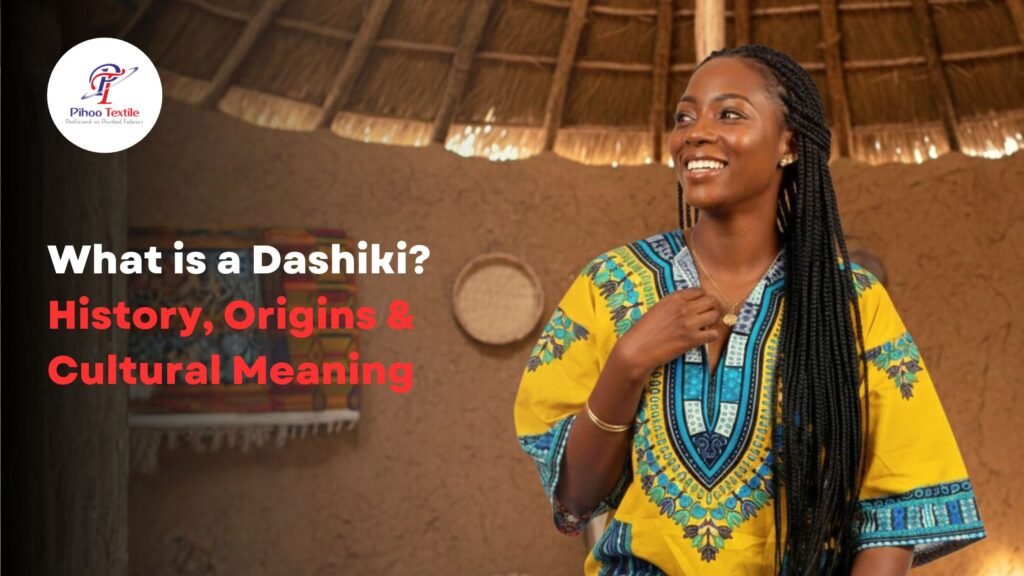
A dashiki is a loose-fitting, pullover garment featuring a wide body cut, short sleeves, and a distinctive V-shaped or U-shaped neckline finished with embroidered or printed trim. The silhouette prioritizes comfort over structure, relying on fabric weight and drape rather than tailored seams to create its characteristic flowing appearance.
Core construction features that define an authentic dashiki:
- Wide, rectangular body panels front and back with minimal shaping
- V-neck or scoop neckline on the front panel only
- Embroidered, appliquéd, or printed collar trim in contrasting or complementary color
- Short sleeves cut as extensions of the body panel rather than separate set-in pieces
- Hem falling between hip and mid-thigh length
These features distinguish a dashiki from other West African garments like the boubou, which is longer and more formal, or the kente cloth shirt, which uses strip-woven fabric rather than wax print cotton.
Etymology and Linguistic Origins
The word “dashiki” pulls from two West African language traditions simultaneously. The Yoruba term “danshiki” and the Hausa term “dan ciki” both translate roughly to “shirt” or “inner garment.” This dual-language origin reflects how widely the garment spread across different cultural and linguistic groups in West Africa before any European contact or commercial documentation.
The English spelling “dashiki” emerged through American usage in the 1960s, phonetically approximating the Yoruba pronunciation. This Americanization created the globally recognized name while obscuring the garment’s multilingual African roots.
Traditional West African Roots
Yoruba and Hausa Origins
Documented use of danshiki-style garments in West Africa predates the 19th century, with the Yoruba people of present-day Nigeria maintaining the most direct lineage to current dashiki construction. The garment functioned as practical daily wear suited to tropical climates, providing loose coverage that allowed air circulation.
Hausa communities in northern Nigeria wore longer versions with heavier embroidery suited to drier climates. Coastal West African groups wore lighter, shorter versions. These regional variations evolved independently before commercial fabric production standardized dashiki aesthetics across wider markets.
Construction and Fabric Requirements
Traditional dashiki construction used locally woven cotton in plain or striped patterns. The introduction of Dutch wax print fabrics to West African markets in the 1880s provided dramatically more expressive material options without changing the underlying construction approach. Fabric requirements for authentic results:
- Weight: 150-180 GSM cotton for proper drape without clinging
- Width: Minimum 45 inches to accommodate wide body panels
- Pattern scale: Large repeats (15cm+) that read clearly across the loose silhouette
- Colorfastness: Two-sided vibrancy essential for garments worn loosely where both surfaces show
19th Century: The Angelina Print Influence
A specific moment in dashiki history connects the garment to Dutch wax print production. The “Angelina print” — a particular wax print design featuring the neckline embroidery pattern printed directly onto fabric rather than sewn separately — entered West African markets in the late 19th century. This design innovation made dashiki construction more accessible by eliminating the need for separate embroidery skills, accelerating adoption across wider population groups and income levels.
1960s Global Popularization
Black Power Movement and Counterculture
The dashiki crossed into American mainstream consciousness between 1967 and 1969 through converging cultural forces. Black Power activists wore dashikis as explicit statements of African cultural identity, directly challenging the assimilationist aesthetic of mainstream civil rights fashion. The garment became a visual signal of pan-African solidarity and pride in African heritage.
Simultaneously, the broader American counterculture adopted dashikis as anti-establishment dress, drawn to their non-Western silhouette and vibrant patterns. By 1969, dashikis appeared at Woodstock on attendees with no African heritage, demonstrating the speed at which the garment crossed cultural boundaries once it gained momentum.
American Commercialization
New York’s Harlem district became a production and retail hub for American-made dashikis during the late 1960s. Local entrepreneurs sourced wax print fabrics and produced dashikis at scale to meet demand that existing African importers could not satisfy. This commercialization brought dashikis to mainstream retail while simultaneously diluting quality standards, as manufacturers substituted cheaper synthetic fabrics for authentic wax print cotton.
Cultural Significance and Symbolism
The dashiki carries layered meaning that varies by context, community, and occasion:
- Identity marker: Signals connection to African heritage across diaspora communities
- Political statement: Associated with Black Pride and pan-African movements since the 1960s
- Ceremonial dress: Used for weddings, naming ceremonies, and cultural festivals in West Africa
- Everyday wear: Functions as practical daily clothing in West African communities, stripped of symbolic weight that diaspora contexts assign it
This last point is worth sitting with. In Lagos or Accra, a dashiki is a shirt. In New York or London, the same garment carries decades of political and cultural symbolism. The gap between these readings creates ongoing debates about who can wear dashikis and in what contexts — conversations that intensified as global fashion absorbed the garment into mainstream collections.
Modern Variations and Global Adoption
Contemporary dashiki design maintains core construction while expanding in multiple directions:
- Fitted cuts with side shaping for fashion-forward interpretations
- Women’s dashiki dresses, jumpsuits, and crop top versions
- Matching dashiki sets with coordinating trousers for formal occasions
- Fusion designs combining dashiki tops with tailored Western separates
- Children’s dashikis for family coordinated outfits at cultural events
Global fashion adoption has normalized dashikis across markets where African textiles were previously niche products. This expansion increases demand for quality sourcing while simultaneously flooding markets with low-grade imitations that underperform in finished garments.
FAQs
What fabric works best for dashiki construction?
Authentic wax print cotton at 150-180 GSM delivers the drape, structure, and color vibrancy that dashiki construction requires. The fabric’s natural stiffness holds the wide silhouette without collapsing, while 100% cotton composition ensures breathability for a garment designed for warm climates. Avoid polyester blends, which feel slippery against skin and cannot hold wax-resist dye processes that create long-lasting color.
How much fabric do I need for an adult dashiki?
Standard adult sizing requires 2.5-3 meters for a single-fabric design. If using separate fabrics for body and collar trim, purchase 2 meters of the primary fabric and 0.5 meters of the contrasting trim fabric. Women’s dashiki dresses need 3.5-4 meters depending on length. Always buy an extra 0.25 meters to account for pattern matching on large-scale wax print repeats.
Is the dashiki appropriate for formal occasions?
In West African cultural contexts, dashikis serve both everyday and ceremonial functions. High-quality wax print fabric with detailed collar embroidery creates formal versions suitable for weddings and ceremonies. Matching sets with coordinating trousers function as formal attire. The garment’s appropriateness for formal settings depends on fabric quality and construction detail rather than the garment type itself.
What distinguishes a dashiki from a boubou?
The boubou is a full-length, wide-sleeved garment reaching the ankles, worn primarily for formal and ceremonial occasions. The dashiki is shorter, more casual, and features the distinctive embroidered neckline rather than the boubou’s plain or minimally decorated opening. Both garments use wax print fabrics but serve different social functions and require different fabric quantities — boubous need 5-6 meters compared to the dashiki’s 2.5-3 meters.
Conclusion
The dashiki’s journey from West African everyday wear through American counterculture to global fashion staple reflects how cultural garments gain and shed meaning across contexts. What stays constant is construction: the wide silhouette, embroidered neckline, and authentic wax print cotton that makes the difference between a dashiki that lasts and one that disappoints. Browse our collection and request fabric samples to start your next dashiki project on solid ground.
Pihoo Textiles supplies authentic wax print cotton fabrics meeting the weight, colorfastness, and two-sided vibrancy standards that dashiki construction demands. Every piece undergoes inspection before reaching customers across India, with consistent GSM ratings, 100% cotton composition, and manufacturer certification verified at intake. Our collection covers traditional West African motifs, contemporary fusion patterns, and large-scale repeats suited to dashiki proportions.
Ready to create dashikis with genuine wax print fabric? Visit pihootextile.com to explore our authenticated collection, request sample swatches, and place orders with secure payment and reliable delivery across India.