
Pihoo Textile is an Exporter of Fabrics in whole African countries and also supplies to exporters and local market. Our Printing quality is suitable for African culture.
© 2026 Created by IndiaFinds

June 19, 2026

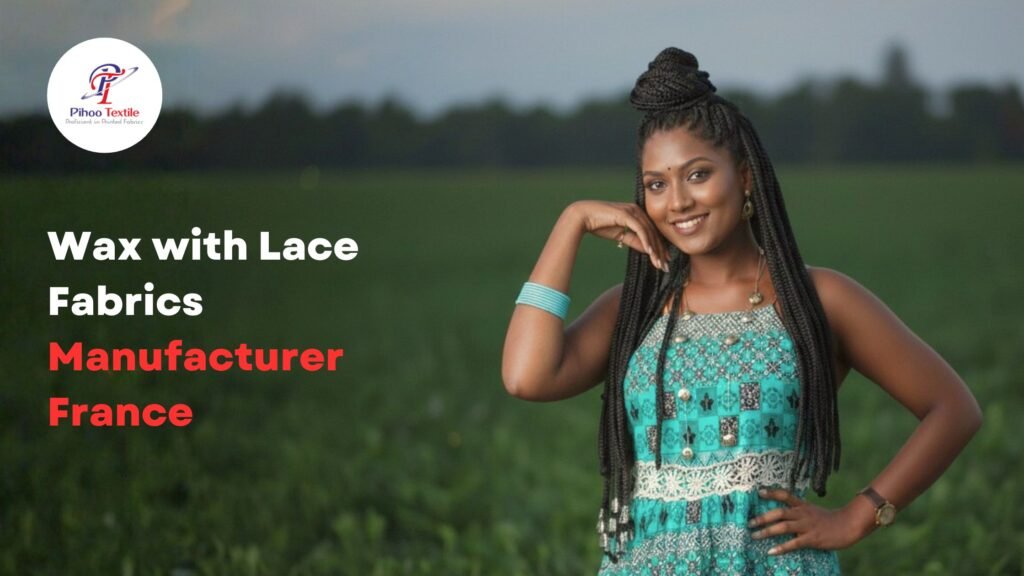
Wax with Lace Fabrics Manufacturer France
Uncategorized

Wax with Lace Fabrics Manufacturer France

Designers and wholesale buyers searching for wax with lace fabrics run into the same wall. Most suppliers offer either pure wax prints or pure lace—rarely both in a single, well-engineered product. When combined fabrics do appear in catalogues, quality documentation is thin, construction details are vague, and sampling lead times stretch for weeks before buyers discover the fabric doesn’t match what was described. The core problem is market fragmentation. Wax print manufacturing and lace production historically operated as separate industries in different geographies. French lace houses in Calais and Caudry built expertise around Leavers looms and couture applications. Wax print manufacturers in South Asia and West Africa developed entirely different supply chains. Wax-lace combinations sit at the intersection of both traditions, which means most single-country sourcing fails to deliver the full product. This guide covers what wax-lace fabrics are, why France matters in this equation, material and construction options, quality checks, fashion applications, and how to source reliably without navigating fragmented supply chains. What Wax with Lace Fabrics Are Wax with lace fabrics combine two distinct textile technologies into a single product or coordinated set. The wax print component uses cotton base fabric printed through wax-resist dyeing—creating double-sided color penetration with characteristic crackle texture. The lace component adds embroidery, guipure, Swiss voile, or tulle overlay to the wax print base or as a coordinating fabric sold alongside it. Product Configurations These combinations appear in three main formats: The contrarian insight? Most buyers assume lace-on-wax combinations are exclusively bridal. In practice, fashion designers increasingly use wax-lace for everyday occasion wear—structured tops, party skirts, and coordinated sets that justify higher retail price points through material complexity. Why France Matters in Lace France holds 80% of the world’s surviving Leavers looms—the heritage machines that produce the most intricate lace constructions. Calais and Caudry represent France’s two primary lace-producing regions. Calais specializes in fine filament lace for lingerie and bridal. Caudry produces broader lace varieties used in couture and high-end ready-to-wear. This geographic concentration means French lace carries verifiable production standards backed by decades of craft documentation. For wax-lace product development, buyers referencing “France” in their sourcing brief are typically specifying lace quality standards and finishing precision—not necessarily requesting French-manufactured fabric throughout. Understanding this distinction prevents sourcing confusion. Materials and Construction Options Material selection determines the garment category a wax-lace fabric suits. Lace Types by Application Cotton wax prints pair most successfully with guipure and Swiss voile because the wax print’s body provides structure that lighter lace types need. Pairing sheer lace with lightweight wax cotton creates opacity problems in finished garments—something buyers discover during sampling rather than spec review. Quality Markers to Check Physical verification prevents expensive bulk order mistakes. For the lace component, check: For the wax print component, check: Construction quality shows in how the two fabrics interact. Check that lace overlays lie flat without puckering and that any stitched combinations hold tension evenly under stretch. Fashion Applications Wax-lace fabrics serve a specific market segment: occasion wear that justifies premium pricing through material quality. Primary applications include: Accessories represent a growing secondary market—headwraps, evening bags, and decorative trim for existing garments where small quantities of wax-lace fabric carry high perceived value. How Manufacturers Work with Buyers Direct manufacturer relationships provide what marketplace sourcing cannot: construction transparency and custom development capability. Reliable manufacturers offer: The uncomfortable sourcing reality? Buyers who skip physical sampling and rely on catalogue descriptions account for the majority of quality disputes at customs clearance. Sample investment is not optional for wax-lace combinations. How to Source Reliably Reliable sourcing requires asking five specific questions before placing any order. Suppliers who answer these questions with specific technical details rather than general assurances operate the kind of production facilities that deliver consistent results. FAQs Can wax print and lace be sourced from the same manufacturer?Few manufacturers produce both in-house because the production technologies differ significantly. Most reliable suppliers either manufacture wax prints and source lace for combination products, or vice versa. The key question is whether their quality control covers both components. What GSM works for wax-lace garments?Wax print bases for lace combinations typically work best at 160-200 gsm—heavy enough to support lace overlay without transparency issues, light enough to drape in gown constructions. Heavier weights suit structured formal pieces; lighter weights work for flowing overlay designs. What’s the minimum order for custom wax-lace combinations?Custom combination products typically require higher MOQs than standard wax prints because coordination between two fabric types adds production complexity. Expect 500-1,000 meters minimum for custom colorway development versus standard in-stock designs. Conclusion Wax with lace fabrics occupy a premium niche that rewards buyers who understand both textile traditions. Production quality, material matching, and construction transparency separate reliable sourcing relationships from expensive mistakes. Pihoo Textiles manufactures premium African wax print fabrics and coordinated fashion textiles from our Jetpur, Gujarat facility—delivering authentic wax-resist cotton with the colorfastness, weight consistency, and construction quality that wax-lace product development demands. Our export team supports custom colorway development, coordinated fabric sets, and reliable bulk supply for designers and wholesalers sourcing wax-based fashion fabrics globally. Request fabric samples from our wax print collection at pihootextile.com, or contact our export team to discuss custom wax-lace coordination, bulk pricing, and direct manufacturer partnerships.
Uncategorized

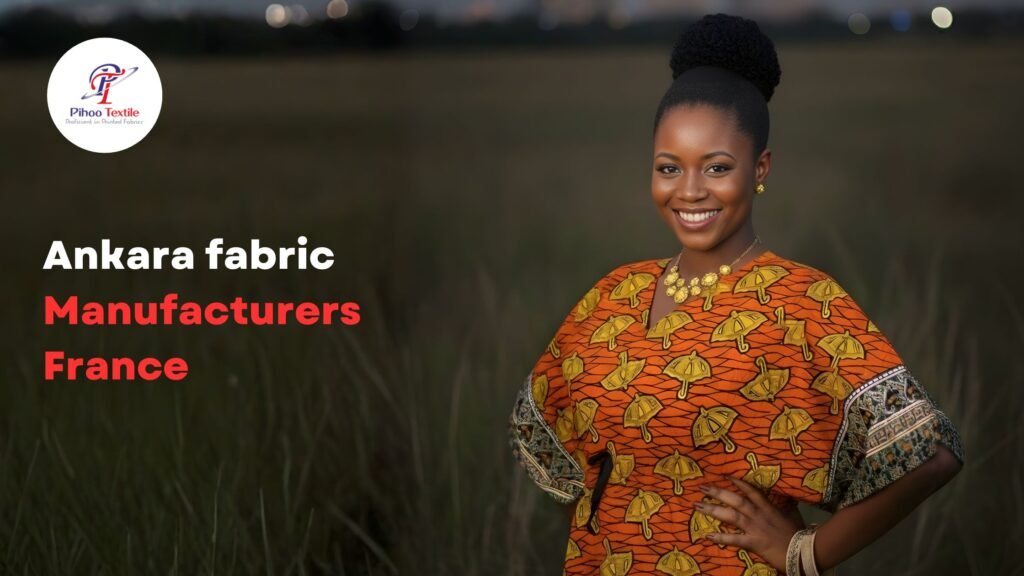
Ankara fabric Manufacturers France

French buyers searching for Ankara fabric manufacturers run into a structural problem. Most search results return local resellers with limited stock, European distributors with long lead times, or Chinese platforms where quality verification is impossible before payment. None of these options give buyers what they actually need: consistent print quality, flexible MOQs, fast sampling, and export documentation that clears European customs without delays. France has one of Europe’s largest African diaspora communities, with over 700,000 people of West African origin, making it a significant and consistent market for Ankara fabric across fashion, accessories, and event wear. Yet supply chains serving this demand remain fragmented. Boutique owners, tailors, and fashion buyers piece together supply from multiple unreliable sources because no single manufacturer has made the French market a priority. This guide covers what French buyers actually require from Ankara suppliers, the supply models available, product types and quality criteria, and how to evaluate manufacturers before committing to bulk orders. What Ankara Fabric Is Ankara is a 100% cotton or cotton-blend fabric produced through wax-resist dyeing methods rooted in Indonesian batik, industrialized by Dutch manufacturers in the 19th century, and adopted as a cultural staple across West Africa. The term “Ankara” circulates interchangeably with “Dutch wax print,” “African wax print,” and “Hollandais” depending on production method and regional convention. The wax-resist process produces fabric with identical print saturation on both sides—the technical marker that separates genuine wax prints from surface-printed imitations. French buyers sourcing for discerning diaspora customers face commercial risk when suppliers substitute fancy prints for real wax without disclosure. What French Buyers Need From Suppliers The requirements French Ankara buyers bring to sourcing conversations cluster consistently around five points: Common Supply Models Local French Resellers Stock limited ranges, typically premium-priced due to import margins. Fast access but minimal customization, restricted pattern selection, and no private-label options. Suitable for emergency restocking but not primary sourcing. European Distributors Operate from the Netherlands, UK, or Belgium with broader stock than French resellers. Lead times of 5-10 days within Europe. Limited custom print capability and MOQs typically higher than direct manufacturer relationships. Overseas Direct Manufacturers India, China, and West Africa supply the majority of Ankara fabric reaching France. Direct relationships with manufacturers eliminate distributor margins, allow custom design development, and provide access to full production ranges. Lead times run 25-45 days by sea freight. Private-Label and Custom Print Suppliers Manufacturers who develop exclusive designs for buyers. Higher setup costs (typically requiring 3,000+ yard minimums for new screens or digital files) but eliminate competition on identical patterns. French boutiques targeting niche markets benefit most from this model. Key Product Types Type Construction Best Use Price Point Real Wax Print Wax-resist dyed, double-sided Ceremonial, premium fashion High Super Wax Finer cotton, tighter weave Luxury garments, bespoke Premium Fancy Print Surface-printed imitation Budget fashion, volume retail Low-Medium Digital Print Custom artwork, short runs Boutique exclusives Medium-High Polycotton Blend Cotton-poly mix Affordable casualwear Low Quality Factors to Verify Request physical swatches—not digital samples—before placing bulk orders. Screen calibration differences between buyer and supplier monitors mean digital color approval regularly fails to match delivered fabric. Test these factors on every swatch: Typical Uses in France French Ankara demand splits across four product categories, each with different volume and quality requirements: How to Evaluate a Manufacturer FAQs Can I import Ankara fabric directly from India to France without a customs agent?Yes, but using a freight forwarder simplifies the process significantly. Textile imports into France from non-EU countries require proper HS codes, accurate commercial invoices, and certificates of origin. Errors in documentation trigger customs holds that delay delivery by weeks. Most experienced manufacturers provide the necessary paperwork as standard. What’s the minimum order for custom Ankara designs?Custom designs requiring new screen printing setups typically need 3,000-5,000 yards to justify tooling costs. Digital custom prints allow smaller runs of 200-500 yards but cost more per yard. If you want exclusive patterns without large commitments, digital printing is the right route. How do I verify Ankara fabric quality without visiting the factory?Request physical swatch samples, not photos. Test colorfastness with a damp white cloth, check GSM against stated specifications using a postal scale and measured piece, and examine both sides for print consistency. Third-party lab testing is available from services like SGS or Bureau Veritas for buyers placing large first orders. Is polycotton Ankara suitable for the French market?It depends on the end customer. Diaspora buyers with strong cultural connections typically reject polycotton substitutes—they recognize the difference in hand feel immediately. Fashion buyers targeting mainstream customers who want the Ankara aesthetic without paying premium prices accept polycotton more readily. Know your customer before specifying fabric composition. Conclusion Sourcing Ankara fabric for the French market requires direct manufacturer relationships that provide consistent print quality, accurate export documentation, and MOQ flexibility suited to boutique-scale buying. Evaluate suppliers on sample quality, communication speed, and documentation capability rather than on price alone. Pihoo Textile manufactures Ankara fabrics—real wax, super wax, fancy print, and digital custom designs—with export documentation for French and European buyers, physical sample availability before bulk commitment, and MOQ flexibility starting from 500 yards. Our Gujarat facility handles full production from design development through export-ready packaging. Visit pihootextile.com to request a sample pack, discuss custom design development, or place a bulk order with delivery direct to France. Source Ankara with manufacturer-direct reliability and print quality your customers will notice.

Scroll to Top